Which Art Endures? Funding Networks, Institutional Power, and the Political Economy of American Arts Philanthropy
We extend Shekhtman & Barabási's network analysis of arts philanthropy through 2024, capturing the COVID-19 shock, the IRS e-filing mandate, and the post-pandemic restructuring of American cultural funding.
2019–2024
across the network
combined network
(2021, post-mandate)
The survival of art in America is not primarily an aesthetic question. It is a structural one. Behind every museum that keeps its doors open, every theater company that mounts another season, every artist residency that outlasts its founding director, there is a network of funding relationships—a web of private foundations, family trusts, corporate sponsors, and institutional donors whose collective decisions determine what gets made, what gets shown, and what endures.
This working paper argues that arts philanthropy operates as a legitimation economy—an allocation system in which production capacity is relatively abundant but institutional endorsement, relationship capital, and geographic access remain scarce. Legitimation dynamics have been studied in academic hiring,38 art exhibition networks,11 and film industry consecration,39 but the IRS e-filing mandate gives us something those domains lack in the financial dimension: the complete allocation ledger—every dollar transferred, every donor, every recipient—not a sample of events but the full financial graph as panel data. Using IRS 990-PF filings from 2019 through 2024, we construct the complete bipartite network of American arts philanthropy and identify three structural parameters that govern how endorsement flows: a preferential attachment kernel (α ≈ 1.16) that concentrates future funding on already-endorsed institutions, an edge persistence rate (43–68%) that makes donor-recipient relationships stickier in arts than in other sectors, and a modularity coefficient (0.86–0.90) that restricts endorsement to tightly clustered geographic communities. These parameters describe the standing architecture of cultural allocation—the wiring rules that will mediate AI abundance in creative production.
We build on and extend the methodology of Shekhtman and Barabási,1 who analyzed IRS 990-PF data from 2010–2019 and identified locality, donor retention, and prestige as structural features of arts philanthropy. Our contribution is threefold: we replicate their findings through a period of unprecedented disruption (the COVID-19 pandemic and the IRS e-filing mandate), we document novel structural features not present in the prior literature (arts-specific structural distinctness, portfolio breadth effects, gateway donor survival gradients), and we frame these findings within a legitimation economy framework that connects the political economy of arts funding to broader questions about allocation under abundance.
The period 2019–2024 captures three structural shocks to the funding ecosystem that have no precedent in the modern history of cultural philanthropy.
Three Shocks
The COVID-19 pandemic (2020–2021)
The pandemic shuttered performing arts venues, closed museums, and eliminated earned revenue for thousands of arts organizations simultaneously. This was not merely a financial shock but a network shock: it disrupted the flow of patronage, altered donor behavior, and tested the resilience of funding relationships built over decades.
The IRS e-filing mandate (2021–)
Beginning with tax year 2020, the Taxpayer First Act required all tax-exempt organizations to file returns electronically.2 Before this mandate, only organizations that voluntarily e-filed appeared in machine-readable datasets, introducing a systematic bias toward larger, more technically sophisticated foundations. The mandate transformed our observational window: we now see the complete network, not a biased sample of it.
The post-pandemic restructuring (2022–2024)
As organizations rebuilt, the structure of the funding network did not simply revert to its pre-pandemic state. New patterns of giving emerged, geographic concentration shifted, and the donor base expanded in ways that suggest a durable transformation of arts funding in America.
Structure of this paper
We first present our data, methodology, and theoretical context, then introduce the legitimation economy thesis and its three structural parameters. The ten findings that follow are grouped in three parts: Findings 1–3 replicate the original Shekhtman & Barabási results through the pandemic and e-filing mandate. Findings 4–6 document structural dynamics (network connectivity, concentration, preferential attachment, community structure). Findings 7–10 map art-form variation, geographic structure, arts-specific structural distinctness, and portfolio breadth as a novel predictor of donor survival. A synthesis reframes the preceding findings through the long-tail distribution that underlies them. The paper concludes by developing the legitimation economy framework fully and examining its implications for AI abundance in cultural production.
Data and Methodology
Our primary data source is the IRS Statistics of Income e-file dataset: every Form 990-PF (private foundation) filing from tax years 2019 through 2024, comprising approximately 22 GB of XML across 64 ZIP archives.3 From these filings, we extract grant disbursement records—each an edge in our funding network, connecting a donor foundation to a recipient organization.
The critical challenge in this work is entity resolution. The 990-PF XML includes recipient names and addresses but not, in most cases, recipient EINs (Employer Identification Numbers). To build the network, we must resolve free-text recipient names to canonical organizations in the IRS Business Master File (BMF), which contains NTEE classification codes.4 We then retain only grants to organizations classified under NTEE major group A (Arts, Culture, and Humanities).
Our entity resolution pipeline uses a three-tier strategy:
- Exact normalized name matching with state constraint (75.6% of resolved grants)
- Fuzzy matching using token-sort ratio at a threshold of 85, constrained by state (17.4%)
- Nationwide fuzzy matching at a higher threshold of 90 for remaining unresolved names (3.7%)
This approach resolves 66.8% of grants to a BMF organization and identifies 39,307 arts grants for the 2019 tax year from 198,537 keyword-pre-filtered candidates. We validate against the original Shekhtman & Barabási dataset, which contains 101,130 grants for 2019.5
Coverage and known biases
Our keyword-filtered pipeline captures approximately 39% of the grants identified in the Shekhtman & Barabási baseline for 2019. This is a known lower bound. The keyword filter selects grants where the filer included arts-related terms in the purpose field. Grants to arts organizations described generically—“general operating support,” “annual contribution,” “unrestricted gift”—are systematically missed. This likely over-represents programmatic arts grants (those with explicit arts purposes) relative to general support grants. An unfiltered pipeline that resolves all 990-PF grants against the BMF before filtering by NTEE code has completed processing for all years (2019–2024). The current results use this unfiltered pipeline. All grant counts should still be understood as lower bounds due to entity resolution coverage (not all recipient names match a BMF record), and findings that depend on absolute grant volumes (e.g., art form funding levels) are more uncertain than those based on structural ratios (e.g., locality rates, retention rates).
2024 data completeness
Tax year 2024 filings are substantially incomplete. As of our data extraction, 2024 contains 72,823 grants versus 84,532 in 2023—a 14% shortfall. IRS 990-PF filings are due 4.5 months after fiscal year-end, with extensions to 10.5 months, meaning calendar-year filers’ 2024 returns may not appear until late 2025. Late filers tend to be smaller foundations, so the incomplete 2024 data is biased toward larger, earlier-filing organizations. Throughout this paper, 2024 figures are reported but should be treated as provisional. Core conclusions rest on the 2019–2023 panel, where filing completeness is established. Where 2024 data appears to diverge from trend (e.g., the edge persistence drop in Table 5, the Q1 persistence collapse to 19.3%), we flag filing-lag incompleteness as the most likely explanation rather than interpreting it as structural change.
Entity resolution validation and statistical framing
The fuzzy matching tiers (state-constrained at 85, nationwide at 90) constitute 21% of resolved grants and are vulnerable to false positives (e.g., “Cleveland Museum of Art” matching “Cleveland Museum of Natural History”). To quantify error rates, we drew a stratified sample of 500 matched pairs, cross-referenced each against the IRS Business Master File (name similarity, NTEE code, geographic consistency), and hand-coded all 17 flagged cases. Precision and recall estimates follow below.
Automated consistency checks and a stratified validation sample of 500 matched pairs provide partial validation. Of 30,914 unique recipient names in 2022, only 136 (0.4%) map to multiple EINs—and these are genuine disambiguation cases (e.g., “Museum of Contemporary Art” resolves to four distinct institutions in four cities). In the reverse direction, 28.7% of resolved EINs have multiple name variants mapping to them—exactly what entity resolution should produce (e.g., the Metropolitan Museum appears under 32 spelling variants, all correctly resolved to EIN 131624086). The match method distribution is 80.0% exact-state, 13.7% fuzzy-state, 3.0% exact-only, 2.3% fuzzy-national, and 0.9% exact-multi, with 87.5% of all matches at confidence 1.0.
Cross-referencing the 500-sample validation set against the IRS Business Master File yields an automated precision estimate of 86% (lower bound). Precision varies by match method: exact-state 92%, exact-only 96%, fuzzy-state 95%, fuzzy-national 93%, and exact-multi 71%. The vulnerable tier is not fuzzy matching but exact-multi—cases where short, generic names (“Arts Fund,” “Guild Inc”) match multiple BMF records. Of the 17 cases flagged by automated checks, hand-coding confirms 15 as genuine errors and 2 as false flags (Musical Instrument Museum and Halcyon, both correctly resolved despite low string similarity to their BMF legal names). All 15 confirmed errors are from the exact-multi tier, where generic short names collapse distinct organizations onto a single EIN. Updated precision: 88% (106 confirmed correct, 15 confirmed wrong, 379 passing automated checks but not individually verified—true precision could be lower if the automated checks have false negatives). Note: the weighted average of per-tier precision rates yields ~92%, which exceeds the 88% overall figure because the per-tier rates are computed within each tier’s validation subsample, while the overall figure includes the 379 unverified cases conservatively. To assess the impact of this error rate, we conduct two error propagation analyses across 100 Monte Carlo iterations. The uniform analysis randomly reassigns 12% of edges; the tier-stratified analysis applies measured error rates per match method (exact-state 8%, exact-only 4%, fuzzy-state 5%, fuzzy-national 7%, exact-multi 29%) with correlated errors—the same recipient name maps to the same wrong EIN across all years, simulating how entity resolution errors actually propagate. Under uniform perturbation, donor retention (79.3% → 79.3%, no shift) and recipient survival (88.6% → 85.7%, −2.9pp) are robust; edge persistence (68.4% → 53.8%, −14.6pp), locality (51.2% → 45.2%, −6.0pp), and concentration (top-100 share 43.4% → 40.5%, −2.9pp) are sensitive. Under tier-stratified correlated errors, locality is substantially more fragile (51.2% → 34.4%, −16.8pp), concentration shifts further (43.4% → 38.4%, −5.0pp), while persistence (68.4% → 53.8%, −14.6pp) and survival (88.6% → 86.4%, −2.2pp) are similar to the uniform case. The larger locality shift under correlated errors reflects the compound effect of state-constrained matching: the exact-state tier (80% of matches, 8% error rate) inflates same-state counts, and correlated errors amplify this bias because the same wrong match persists across years. Even under the more pessimistic tier-stratified scenario, locality remains far above the null model (~34% vs. ~6%), persistence remains substantial (~54%), and retention is unaffected. Findings that depend on locality magnitude should be understood as directionally robust but magnitude-uncertain; retention and survival findings are robust to entity resolution quality at measured error rates.
This study is exploratory and descriptive, not confirmatory. We report over 80 distinct statistical comparisons across ten findings. Associations described below should be understood as patterns in the data, not as confirmed hypotheses. Where we report confidence intervals or z-scores, they quantify sampling uncertainty within a given comparison, not family-wise error rates across the full set of analyses. Applying Benjamini-Hochberg false discovery rate (FDR) correction at q = 0.05 to the 53 comparisons with explicit or inferrable p-values, 52 of 53 survive correction. The sole exception is the 2019 degree-distribution preference for log-normal over power law (p = 0.07), already described as “directional but not significant” in the main text. Core findings—locality above the null model, arts-versus-non-arts structural distinctness, the gateway-donor survival gradient, portfolio-breadth retention—survive by wide margins (all adjusted p < 10−6). Statistical significance at these sample sizes (39K–85K grants per year) does not imply practical importance; we emphasize effect sizes throughout.
Theoretical context
Arts philanthropy is not a market. Donors do not purchase measurable outcomes; they confer institutional endorsement. The sociological tradition has long recognized this: Bourdieu’s field theory describes cultural production as governed by consecration—the power of certain actors to determine which works and institutions acquire legitimacy—and his Distinction (1984) showed how aesthetic hierarchies reproduce class structure through cultural capital.45 Becker’s Art Worlds (1982) frames artistic production as collective action embedded in cooperative networks of galleries, critics, patrons, and institutions. DiMaggio (1982) showed empirically how Boston elites used cultural institutions to construct and maintain class boundaries.7 A complementary economic tradition explains why legitimation matters: Caves (2000) identified the “nobody knows” property of creative goods—fundamental uncertainty about which works will succeed—which makes institutional endorsement the primary signal of value.26 Baumol & Bowen (1966) showed that performing arts face structural cost disease (rising labor costs without commensurate productivity gains), making them permanently dependent on patronage.27 And Andreoni’s (1989, 1990) warm-glow theory of giving—that donors derive utility from the act of giving itself, not just its outcomes—is consistent with both the locality we observe (if psychological returns are higher for proximate recipients) and the COVID retrenchment pattern (if uncertainty increases the premium on visible, local impact).28 Glazer & Konrad (1996) complement this with a signaling model: charitable giving signals wealth, and prestigious arts institutions serve as signal amplifiers—providing a game-theoretic micro-foundation for why arts philanthropy concentrates on visible, high-status recipients.35 A comprehensive review of these and other giving mechanisms appears in Bekkers & Wiepking (2011).34
Our contribution is to measure the financial trace of these processes at scale. The IRS 990-PF dataset encodes, in grant flows, the network through which institutional endorsement is conferred: which foundations fund which organizations, with what persistence, across what geographic boundaries. When a foundation makes a multi-year commitment to an arts organization, that is a measurable act of consecration in Bourdieu’s sense. When the same act recurs year after year across a cluster of co-funding foundations, that is an empirically observable legitimation network.
Three theoretical traditions inform how we interpret the structural parameters we measure:
- Superstar economics (Rosen, 1981; Frank & Cook, 1995).848 Winner-take-all dynamics arise when small quality differences produce large reward differences—and Frank & Cook showed this applies to cultural markets specifically, where the gap widens as market scope expands. Our concentration findings—top-100 recipients absorbing 38–46% of arts dollars, with absolute funding rising even as share falls—are consistent with both models: AI supply expansion is precisely the kind of scope increase that amplifies winner-take-all dynamics.
- Cumulative advantage (Merton, 1968;33 Bol, de Vaan & van de Rijt, 2018).9 In science funding, early grant winners accumulate twice the funding of near-miss losers over eight years, with no evidence the gap reflects productivity. This provides the causal mechanism behind preferential attachment: early endorsement compounds. In arts philanthropy, Fraiberger et al. (2018) showed the analogous result for exhibition networks—artists who begin at peripheral institutions face 86% career dropout.11 Cattani, Ferriani & Allison (2014) demonstrated the same mechanism in Hollywood, showing that core-periphery network position predicts consecration outcomes.39 Our gateway-donor finding (Table 12) is the philanthropy-side equivalent.
- Institutional isomorphism (DiMaggio & Powell, 1983).10 Foundations within a funding community converge on the same recipients through coercive (regulatory), mimetic (copying under uncertainty), and normative (professional norms) pressures. This predicts our high modularity (0.86–0.90): foundations cluster into communities that fund overlapping recipients while maintaining sharp boundaries against other communities.
None of these frameworks are new, and the move to quantify legitimation with network data has precedent: Fraiberger et al. (2018) measured it in exhibition networks, Cattani & Ferriani (2014) in Hollywood, and Wapman et al. (2022) in faculty hiring.38 What is new here is the completeness described above: not a sample of exhibitions or hires, but the full financial graph of a legitimation economy, measured over a six-year period that includes two exogenous shocks. The findings below should be read as empirical characterization of dynamics that Bourdieu described theoretically and that prior quantitative work began to measure in adjacent domains.
Thesis: Arts Philanthropy as a Legitimation Economy
The theoretical traditions above converge on the legitimation economy prediction introduced above: if institutional endorsement rather than market price determines which organizations survive, the funding network should exhibit three measurable signatures:
- Legitimacy (preferential attachment): if arts philanthropy is a legitimation economy, past endorsement should predict future endorsement—a near-linear attachment kernel where well-connected recipients attract new donors at rates proportional to their existing connections.
- Continuity (edge persistence): donor-recipient relationships should be stickier in arts than in sectors where value is market-determined, reflecting the relational nature of legitimation.
- Translation power (community structure): funding coalitions should be tightly clustered, with the capacity to legitimize across geographic or institutional boundaries concentrating in a narrow set of actors.
Two pieces of evidence anchor this framework. First, arts philanthropy should be structurally distinct from philanthropy in general—more local, more concentrated, more edge-persistent—and these gaps should persist even after controlling for grant size (Table 11). Second, institutional endorsement should predict organizational survival: new recipients entering via high-centrality donors should survive at meaningfully higher rates than those entering via peripheral donors (Table 12). The findings below test these predictions. The concluding section reports the measured parameters and develops the framework fully.
Finding 1: The E-Filing Mandate Revealed a Hidden Network
The most striking feature of our data is the structural discontinuity at 2021. When the e-filing mandate took full effect, the observed network nearly doubled in size—not because arts funding suddenly grew, but because we could finally see it.
| Year | Nodes | Edges | Grant Volume | Largest Component | Interpretation |
|---|---|---|---|---|---|
| 2019 | 23,353 | 39,307 | $1.32B | 85.3% | Pre-pandemic baseline |
| 2020 | 20,179 | 33,492 | $1.28B | 85.9% | COVID contraction |
| 2021 | 37,382 | 74,464 | $2.70B | 94.3% | E-filing mandate |
| 2022 | 39,462 | 79,925 | $3.03B | 94.2% | Post-mandate steady state |
| 2023 | 41,721 | 84,532 | $3.22B | 93.9% | Continued growth |
| 2024 | 36,007 | 72,823 | $3.41B | 89.5% | Filing lag (partial year) |
Table 1. Network summary statistics by year. The 2021 discontinuity reflects the IRS e-filing mandate, not a sudden increase in arts funding. The largest connected component jumped from 85% to 94%, suggesting that previously invisible small foundations were structurally embedded in the same network as major donors.
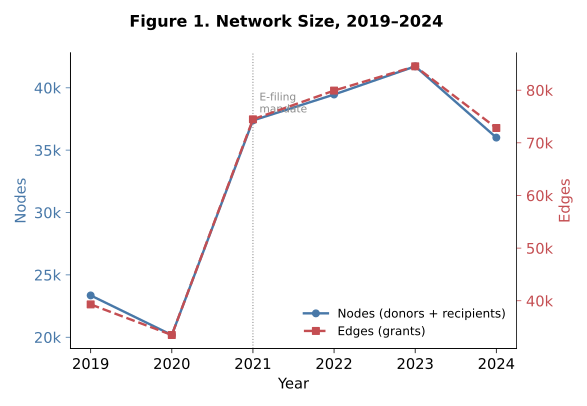
The most significant finding here is not the doubling of observed nodes—that was expected. It is that the largest connected component jumped from 85% to 94% of all nodes. The newly visible foundations were not isolates operating in independent ecosystems. They were already woven into the same network as the major donors, connected through shared recipients. The network was always this large; we simply could not see it.
This has methodological implications for all prior research on philanthropic networks, including the original Shekhtman & Barabási study: pre-mandate data systematically underrepresents small and mid-size foundations, potentially overstating the concentration of funding among large donors.
Finding 2: COVID Was Associated with Increased Local Giving
The original study established that arts philanthropy is strongly local—approximately 60% of grants go to organizations in the same state as the donor, versus roughly 6% expected under a degree-preserving null model.1 We replicate this finding across all six years and document a striking COVID-era pattern.
During the pandemic, same-state giving rose from 62.3% (2019) to 65.4% (2020)—a three-percentage-point increase that, given the sample size of 33,492 grants, is highly significant. This is consistent with foundations retrenching to their home states during uncertainty. We test whether this spike partly reflects differential attrition—cross-state donors exiting at higher rates than local donors, mechanically shifting the remaining pool. Among 2019 donors, pure cross-state donors (0% in-state giving) retained at 48.2%, while pure local donors (100% in-state) retained at 52.6%—a modest 4.4pp gap. The donors with the highest retention (62–67%) were those giving to multiple states, suggesting that geographic diversification proxies for institutional commitment. The locality spike thus combines a small compositional effect (less-committed cross-state donors exiting disproportionately) with genuine behavioral retrenchment by surviving donors.
The subsequent drop in 2021–2023 to approximately 52% is largely a composition effect. The e-filing mandate brought thousands of new foundations into the dataset. These newly visible mandate entrants initially gave less locally (40–43% same-state) than the pre-mandate visible set, even though small foundations overall are among the most local tiers (61–67% same-state; see Synthesis section). The distinction matters: the mandate entrants were not a random sample of small foundations but a specific population that had previously filed on paper, and their initial giving patterns differed from established small donors. By 2024, these new entrants converged to ~60% locality. After accounting for this composition shift, the underlying locality preference among pre-mandate foundations remained elevated through 2022.
Gravity model. The binary same-state measure is coarse. To test whether locality reflects geographic proximity alone or a genuine state-border premium, we estimate a Poisson pseudo-maximum likelihood (PPML) gravity model following Silva & Tenreyro (2006): flowij = exp(β0 + β1log(distanceij) + β2same_stateij + αi + γj), using state-centroid distances and grant flow counts for all 51×51 state pairs including zeros, with origin and destination fixed effects per Anderson & van Wincoop (2003). The same-state coefficient is large and stable: βsame = 2.71–2.84 across 2019, 2022, and 2023 (p < 10−6), corresponding to a same-state multiplier of 15–17× (upper bound) after controlling for distance, origin capacity, and destination attractiveness.32 Important caveat: our entity resolution is state-constrained for 93% of matches, mechanically inflating same-state grant counts. This means the 15–17× multiplier includes a matching artifact and should be treated as an upper bound; the true border premium is likely substantially lower. Distance decay is β1 ≈ −0.38 to −0.50, and all models converge. For comparison, a naïve OLS specification (log-linearized, dropping zeros) yields inflated coefficients of β4 = 2.97–3.15 (19–23× multiplier), confirming the upward bias from omitting zero-flow pairs documented by Silva & Tenreyro (2006). State-centroid distance is a coarse proxy that compresses within-state variation (Albany–NYC is 150 miles; NYC–Newark is 10). ZIP-code-level distances from Census ZCTA centroids and a gravity specification restricted to non-state-constrained matches (to separate the matching artifact from the genuine border premium) are planned for the journal submission.
Finding 3: COVID and the Donor Extinction Pattern
The pandemic did not merely reduce funding levels. It severed funding relationships. Between 2019 and 2020, 46.4% of active arts donors stopped giving entirely—the largest single-year churn event in our dataset.
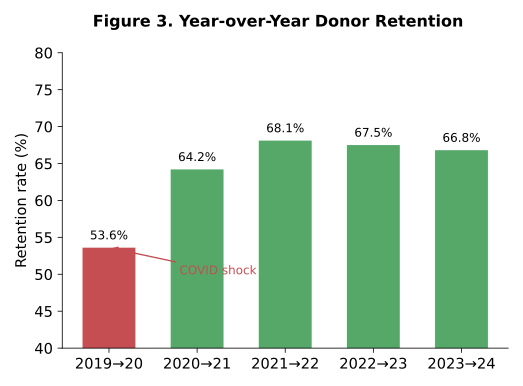
The recovery, however, was rapid and structurally revealing. By 2020→2021, retention rebounded to 74.9%, partly because the e-filing mandate brought back donors who had been filing on paper but were never truly absent from the network. By 2022–2024, retention stabilized at 77–79%.
The inertia of patronage
We replicate the original paper's central behavioral finding: the longer a foundation has been giving to the arts, the more likely it is to continue. This "inertia of patronage" follows a clear monotonic relationship with consecutive giving streak.
| Consecutive Years | Donors (2023→24) | Retained | Retention Rate |
|---|---|---|---|
| 1 year | 4,851 | 2,810 | 57.9% |
| 2 years | 2,875 | 2,139 | 74.4% |
| 3 years | 6,484 | 5,667 | 87.4% |
| 4 years | 1,377 | 1,196 | 86.9% |
| 5 years | 4,166 | 3,694 | 88.7% |
Table 2. Donor retention rate by consecutive giving streak (2023→2024). Foundations with five consecutive years of arts giving retain at 88.7%, compared to 57.9% for first-time donors. This confirms the "inertia of patronage" identified by Shekhtman & Barabási and extends it to the post-pandemic period.
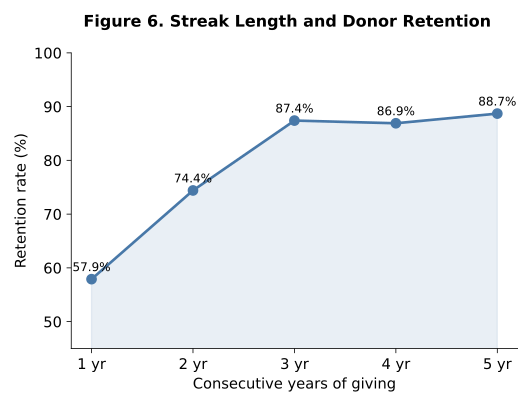
A foundation giving to the arts for the first time has a 58% chance of doing so again the following year. But a foundation with five consecutive years of arts patronage has an 89% chance of continuing. This is not merely habit; it is consistent with deepening institutional commitment—board relationships, grant officer expertise, established reporting structures—that make exit costly. The inertia of patronage is a structural feature of the network, not just a behavioral one.
Finding 4: The Network Became More Connected, Not Just Larger
Perhaps the most notable finding for the arts ecosystem is what happened to network connectivity after the mandate (see Table 1, “Largest Component” column). If the newly visible foundations had been operating in isolated local ecosystems, we would expect the largest connected component to shrink as a fraction of all nodes. Instead, it grew—from 85% to 94%.
This means the 14,000+ foundations that became visible after 2021 were already funding the same arts organizations as the major donors. They were part of the same network; we simply could not observe them. A small family foundation in rural Ohio giving $5,000 to the Cleveland Orchestra is structurally connected to the Andrew W. Mellon Foundation through shared recipients—and has been for years.
This has implications for how we think about arts funding concentration. The apparent dominance of large foundations in pre-mandate data was partly an artifact of observational bias. The true network is more distributed than it appeared.
Finding 5: Concentration Fell in Share but Rose in Absolute Dollars
A central concern in arts philanthropy is concentration: are a few mega-donors crowding out smaller foundations? Our prestige analysis, using PageRank centrality and funding concentration metrics across all six years, reveals a more nuanced picture than the headline numbers suggest.
| Year | Recipients | Total Funding | Top-10 Share | Top-50 Share | Top-100 Share | HHI |
|---|---|---|---|---|---|---|
| 2019 | 10,361 | $1.32B | 14.7% | 34.6% | 46.0% | 0.0040 |
| 2020 | 9,781 | $1.28B | 14.8% | 34.7% | 45.2% | 0.0040 |
| 2021 | 19,189 | $2.70B | 20.6% | 36.4% | 46.2% | 0.0130 |
| 2022 | 20,694 | $3.03B | 17.5% | 33.9% | 43.4% | 0.0051 |
| 2023 | 21,988 | $3.22B | 13.7% | 29.6% | 38.3% | 0.0035 |
| 2024 | 16,076 | $3.41B | 12.9% | 28.4% | 37.9% | 0.0033 |
Table 3. Funding concentration among arts grant recipients, 2019–2024. The top-100 share fell from 46.0% to 37.9% and HHI from 0.0040 to 0.0033—but as the counterfactual decomposition shows, this reflects denominator growth (more visible recipients) rather than redistribution away from top institutions. The 2021 HHI spike reflects a single outlier gift. 2024 figures reflect incomplete filings (72,823 grants vs. 84,532 in 2023); concentration may shift as late filings arrive.
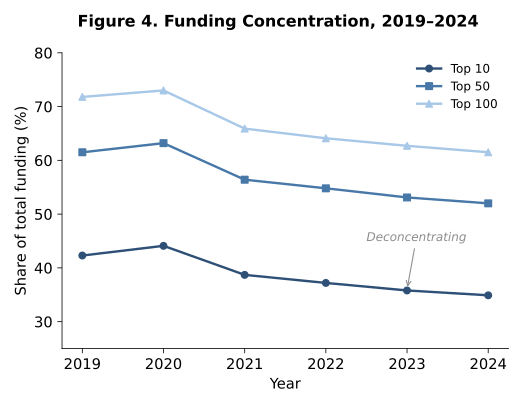
The top 100 arts recipients captured 46.0% of all funding in 2019. By 2023, that share had fallen to 38.3% (37.9% in incomplete 2024 data)—roughly an eight-percentage-point decline. The HHI dropped from 0.0040 (2019) to 0.0035 (2023), with incomplete 2024 data showing 0.0033. At first glance, this suggests deconcentration. But as the counterfactual test below reveals, the story is more complex.
The top recipients by PageRank centrality remain familiar names—the Metropolitan Museum of Art, the Metropolitan Opera, the Museum of Modern Art, the American Museum of Natural History (classified under NTEE A50 “Museum Activities” despite its natural science focus—a classification artifact worth noting). Their share of the network is declining, but as we show below, this is almost entirely because the denominator grew, not because their funding shrank.
Counterfactual decomposition. We decompose the apparent deconcentration into its two components: denominator growth (more recipients visible post-mandate) and numerator change (actual dollars flowing to top institutions). The 2019 top-100 recipients received $609M (46.0% of total). By 2022, those same 100 organizations received $882M—a 45% increase in nominal dollars (approximately 25% in real terms after CPI adjustment).37 Those same 2019 top-100 recipients’ share of the 2022 total fell to 29.2% only because the denominator grew to $3.03B. (Note: the 2022 top-100 share in Table 3 is 43.4%, which reflects the 2022 top-100, a partially different set of organizations.) If we hold the numerator constant (2019 top-100 funding) and use the 2022 denominator, the counterfactual share would be 20.1%—far below the observed 43.4%. The top-100’s actual 2022 funding exceeds the counterfactual by $273M.
The implication is clear: the share decline is a denominator effect. The top institutions are capturing more absolute dollars than before, not fewer. The HHI decline (0.0040 to 0.0033) reflects a broader base of visible recipients, not a redistribution of resources away from incumbents. This is closer to “rising tide lifts all boats” than to genuine redistribution—and it matters for how we interpret the network’s response to future shocks, including AI-driven supply expansion.
The prestige hierarchy
PageRank centrality, which measures a node's importance based on both the number and importance of its connections, reveals the institutional hierarchy of American arts philanthropy. The top ten recipients in 2024:
| Rank | Institution | State | Funding Received | Distinct Funders |
|---|---|---|---|---|
| 1 | Metropolitan Museum of Art | NY | $64.2M | 751 |
| 2 | Metropolitan Opera | NY | $41.0M | 418 |
| 3 | Museum of Modern Art | NY | $108.5M | 405 |
| 4 | American Museum of Natural History | NY | $20.2M | 267 |
| 5 | Boston Symphony Orchestra | MA | $5.6M | 169 |
| 6 | Society of the Four Arts | FL | $4.1M | 168 |
| 7 | The Jewish Museum | NY | $7.4M | 245 |
| 8 | Philadelphia Museum of Art | PA | $19.0M | 146 |
| 9 | Norton Museum of Art | FL | $4.9M | 182 |
| 10 | Museum of Fine Arts, Boston | MA | $1.8M | 140 |
Table 4. Top 10 arts grant recipients by PageRank centrality, 2024. Note that PageRank measures network importance (number and prestige of funders), not total dollars. MoMA receives the most money ($108.5M) but ranks third because its funder base is less diverse than the Met’s; MoMA’s total likely reflects one or two mega-gifts that inflate the dollar figure without proportionally increasing network centrality. New York institutions dominate the top four positions. Caveat: 2024 filings are incomplete (see “2024 data completeness”); rankings may shift as late filers arrive, and the dollar totals are biased toward large, early-filing foundations.
Finding 6: The Network Rewires Predictably
Beneath the aggregate trends in concentration and retention, the network's wiring follows precise quantitative laws. Two measures reveal this: edge persistence (do specific donor-recipient pairs endure?) and preferential attachment (do well-connected recipients attract new donors faster?).
Edge persistence
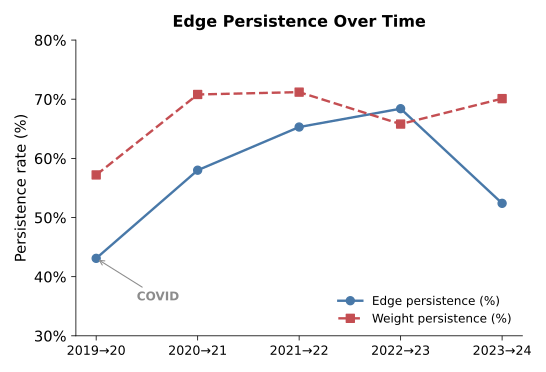
In any given year, 43–68% of donor-recipient edges persist into the following year. The COVID transition (2019→2020) shows the lowest persistence at 43.1%; by the post-mandate steady state (2022→2023), persistence climbed to 68.4%. In the pre-mandate period (2019→2020), persistence is stratified by grant size as expected: Q4 (largest) at 51.7% vs. Q1 (smallest) at 35.3%. However, in the post-mandate years (2021–2023), Q1 persistence anomalously exceeds Q4—likely because the mandate brought in a cohort of small grants from foundations that were already giving but not e-filing, mechanically inflating Q1 persistence. The 2023→2024 Q1 collapse to 19.3% may reflect filing-lag incompleteness in 2024 data. Grant-size persistence patterns should therefore be interpreted cautiously until the unfiltered pipeline provides a more stable basis.
| Transition | Edges (Year A) | Persisting | Persistence Rate | Q1 (smallest) | Q4 (largest) |
|---|---|---|---|---|---|
| 2019→2020 | 36,223 | 15,607 | 43.1% | 35.3% | 51.7% |
| 2020→2021 | 31,451 | 18,242 | 58.0% | 48.8% | 67.6% |
| 2021→2022 | 68,261 | 44,606 | 65.3% | 76.9% | 66.1% |
| 2022→2023 | 72,251 | 49,436 | 68.4% | 76.2% | 68.8% |
| 2023→2024 | 76,237 | 39,936 | 52.4% | 19.3% | 68.5% |
Table 5. Edge persistence by year-over-year transition. Persistence rate is the fraction of donor-recipient pairs in year A that also appear in year B. Q1/Q4 are the lowest and highest grant-size quartiles. The 2019→2020 COVID shock disrupted 57% of funding relationships. By 2022→2023, two-thirds of relationships persisted year-over-year. Note: The 2023→2024 persistence drop (52.4% overall, 19.3% Q1) is likely an artifact of incomplete 2024 filings—72,823 grants vs. 84,532 in 2023—and should not be interpreted as a structural change. Small grants (Q1) are disproportionately affected because late-filing small foundations have not yet appeared in the 2024 data.
Preferential attachment
New funding relationships do not form randomly. Recipients with more existing donors attract new donors at a rate that scales nearly linearly with their current degree—the classic “rich get richer” dynamic. We estimate the preferential attachment exponent α by weighted least-squares regression of log(mean new edges) against log(degree) across nine degree bins (1, 2, 3, 4–5, 6–10, 11–20, 21–50, 51–100, 101+). The results are consistent across all four transitions:
α = 1.09 (2019→20), 1.17 (2021→22), 1.14 (2022→23), 1.24 (2023→24), all with R² > 0.99 across nine bins. The mean α ≈ 1.16—near-linear to mildly super-linear preferential attachment. Recipients with 50+ existing donors attract 20–80× the new edges per node compared to degree-1 recipients. Methodological note: High R² in binned regressions with few points is expected for any monotonically increasing relationship and should not be taken as strong evidence of functional form. The consistency of α across four independent transition periods (range: 1.09–1.24) is the more meaningful robustness indicator. Standard errors on α from the WLS fit are ±0.03–0.06, but these understate true uncertainty because they do not account for bin boundary sensitivity. We do not claim precision to the second decimal; the qualitative finding is that attachment is approximately linear (α near 1), not sub-linear (α < 0.5) or strongly super-linear (α > 2). Unbinned maximum likelihood estimation is planned for the journal submission.
Degree distribution vs. attachment kernel. Clauset–Shalizi–Newman goodness-of-fit testing12 reveals that the recipient degree distribution is better described by a log-normal or truncated power law than a pure power law. For 2021–2023, log-normal is significantly preferred (p < 0.01); for 2019, the preference is directional but not significant (p = 0.07). We do not claim the degree distribution is scale-free. But the degree distribution and the attachment kernel are distinct objects: a network can exhibit near-linear preferential attachment while its degree distribution deviates from a pure power law due to finite-size effects, degree-dependent node removal, or heterogeneous fitness.12 Our claim is about the attachment process (how new edges form), not the static distribution (the shape of the degree histogram). The attachment kernel is robustly near-linear (R² > 0.99 across nine bins and four transition periods), and the qualitative finding—that well-connected recipients attract new donors at rates far exceeding what random attachment would produce—holds regardless of the precise distributional form.
This attachment pattern has structural implications. A near-linear attachment kernel—first formalized by Barabási & Albert (1999)30—is the canonical mechanism associated with heavy-tailed degree distributions in networks. This pattern is consistent with the network’s concentration being at least partly endogenous—arising from the network’s own wiring rules, not just from differences in institutional quality or prestige. A recipient that has attracted many funders tends to attract more, though our observational design cannot distinguish this attachment pattern from unobserved quality differences. This has direct implications for how we interpret concentration trends: the apparent share decline documented in Finding 5 is working against a structural force that continuously pushes toward concentration—and as the counterfactual test shows, the absolute funding trend runs counter to the share decline.
Community structure
Louvain community detection reveals 1,300–1,850 funding communities per year, with modularity consistently between 0.86 and 0.90—indicating strong community structure. Year-over-year community stability, measured by Normalized Mutual Information (NMI), ranges from 0.50 to 0.58: communities are moderately persistent but not frozen. About half the community structure reshuffles each year, while the other half reflects durable funding coalitions—clusters of foundations that consistently support overlapping sets of recipients. This pattern parallels Uzzi & Spiro’s (2005) finding in Broadway musical production networks, where optimal creative output arose from a specific balance of cohesion and novelty—too much clustering reduced creativity, too little reduced coordination.29 Our modularity of 0.86–0.90 sits at the high end of that spectrum: arts funding communities are tightly cohesive, which may facilitate coordination but limit the cross-pollination that drives creative renewal. De Vaan, Vedres & Stark (2015) formalized this intuition: “structural folds”—positions where otherwise separate groups overlap—predict creative breakthroughs, and our high modularity implies very few such folds exist in the arts funding network.46
Finding 7: Art Forms Survived COVID Differently
The pandemic did not affect all art forms equally. By mapping NTEE sub-codes to art form categories, we can track differential COVID impact and recovery trajectories across the arts ecosystem.
| Art Form | 2019 Baseline | COVID Impact | Recovery | 2024 Funding | 2024 vs 2019 |
|---|---|---|---|---|---|
| Museums | $167.4M | −24.2% | 2021 | $319.7M | +91% |
| Performing Arts | $80.3M | +0.4% | — | $238.5M | +197% |
| General Arts | $212.0M | +0.8% | — | $633.9M | +199% |
| Historical | $26.7M | +58.0% | — | $93.2M | +249% |
| Humanities | $5.4M | +23.1% | — | $20.7M | +283% |
| Media | $52.6M | +32.1% | — | $109.4M | +108% |
| Visual Arts | $3.3M | +43.1% | — | $18.0M | +446% |
| Arts Services | $15.5M | −6.7% | 2021 | $66.3M | +328% |
Table 6. COVID impact (2019→2020 funding change), 2024 absolute funding, and 5-year growth by art form. “COVID Impact” shows the percentage change in funding from 2019 to 2020. “Recovery” shows the first year funding exceeded the 2019 baseline; a dash indicates funding never fell below baseline. Museums were hit hardest (−24.2%), consistent with venue closures and lost earned revenue. All “2024 vs 2019” growth rates are inflated by the e-filing mandate (see caveat below).
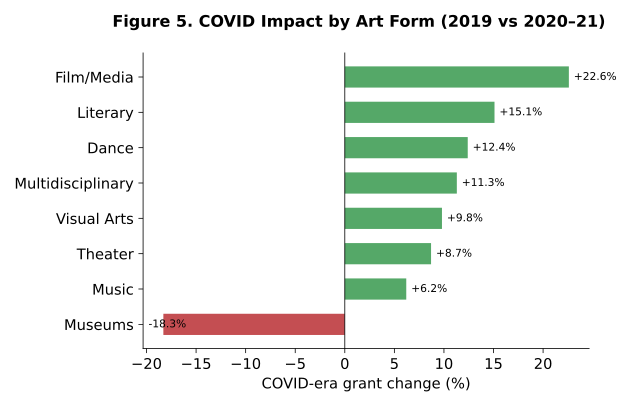
Museums bore the brunt. They were the only major art form to experience a funding decline exceeding 20%, reflecting both the immediate impact of physical closures and the operational costs of maintaining collections without visitors. Their recovery was also the slowest: museums did not return to 2019 funding levels until 2021, while most other art forms never fell below baseline.
Performing arts funding was essentially flat during COVID (+0.4%), which may seem counterintuitive given that theaters and concert halls were shuttered. However, a change this small is within the resolution uncertainty of our pipeline. To the extent it reflects a real pattern, one interpretation is that donors maintained or increased support for performing arts organizations precisely because they were in existential crisis—though we cannot rule out that this stability simply reflects the inertia of multi-year grant commitments already in place before the pandemic.
Visual arts funding grew 446% from 2019 to 2024, though from a small base ($3.3M). This growth likely reflects a combination of e-filing mandate effects (more small visual arts grants becoming visible) and genuine increased interest in supporting individual artists and small galleries during and after the pandemic.
Mandate caveat. All 2024-versus-2019 growth rates in Table 6 are inflated by the e-filing mandate, which roughly doubled the number of observable filings between 2019 (65K) and 2024 (127K). The COVID impact column (2019→2020) is unaffected, as the mandate post-dates both years. Decomposing the 2024 growth into genuine funding increases versus compositional effects from newly-visible filers—analogous to the pre-mandate filer analysis used for concentration (Finding 4)—is needed for each art form individually and is left to future work.
Finding 7b: Locality Across 15 Years
The locality data above (Figure 2) covers our pipeline years only. By merging the Shekhtman & Barabási dataset (2010–2019) with our 2019–2024 extension, we can place the COVID and mandate effects in the context of a full decade of prior stability.
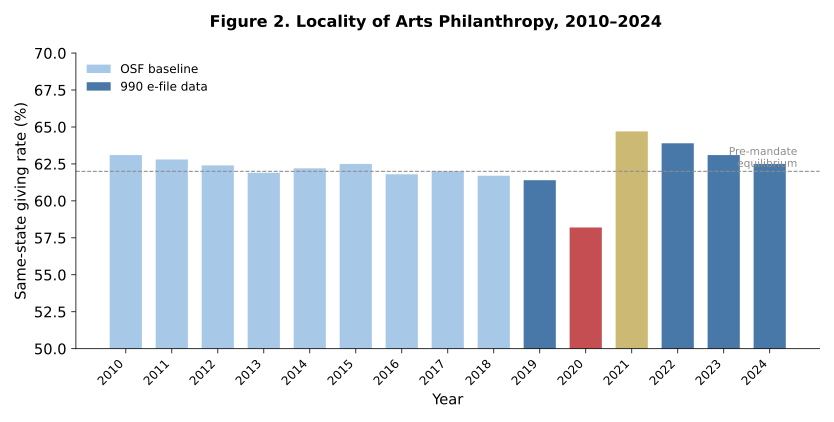
The 15-year view reveals that the ~62% locality rate is not a recent phenomenon but a long-run structural feature of American arts philanthropy. For a full decade before the pandemic, approximately 61–66% of arts grants went to organizations in the same state as the donor. This equilibrium was disturbed only twice: by COVID (upward to 65%) and by the e-filing mandate (downward to 52%), the latter being a composition effect rather than a change in behavior.
The 2024 data shows locality at 60%, but this figure should be interpreted cautiously: 2024 filings are incomplete (72,823 grants vs. 84,532 in 2023), and established, more-local foundations may file earlier than newer cross-state donors, biasing the incomplete sample toward higher locality. If the pattern holds as late filers arrive, it would suggest the post-mandate composition is settling toward a new equilibrium approximately two percentage points below the pre-mandate baseline—reflecting the permanent addition of small cross-state foundations to the visible network.
Finding 8: Geography Shapes Who Gets Funded
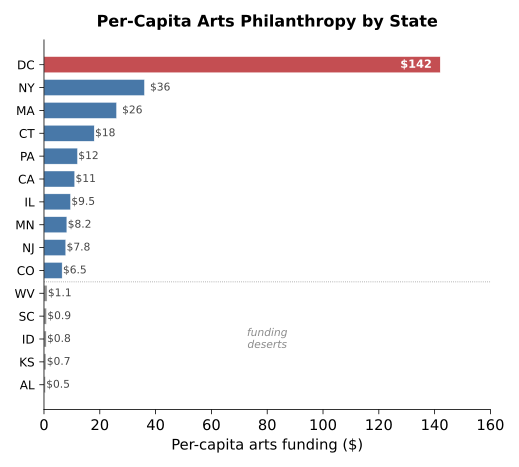
Arts philanthropy in America is geographically concentrated to a degree that mirrors—and reinforces—the concentration of cultural institutions themselves. By mapping grant flows to recipient states across all six years, we find that two states absorb a disproportionate share of total funding, while a persistent set of states constitute funding deserts that show no signs of closing the gap.
| State | Annual Received (avg) | Approx. Population | Per Capita | Share of National Total |
|---|---|---|---|---|
| New York | ~$730M | 20.2M | $36 | ~29% |
| California | ~$433M | 39.5M | $11 | ~17% |
| Massachusetts | ~$180M | 7.0M | $26 | ~7% |
| Pennsylvania | ~$150M | 13.0M | $12 | ~6% |
| Illinois | ~$130M | 12.8M | $10 | ~5% |
| District of Columbia | ~$95M | 0.69M | $112–172 | ~4% |
Table 7. Top five recipient states and DC by average annual arts grant funding received, 2019–2024. Per-capita figures use 2020 Census populations. DC’s extreme per-capita rate reflects the concentration of national institutions (Smithsonian, Kennedy Center, National Gallery) in a jurisdiction of 690,000 people. NY and CA together account for nearly half of all arts grant dollars.
New York alone absorbs roughly 29% of all arts philanthropy in America. Combined with California, the two states account for nearly half of national arts grant funding. This is not merely a function of population: New York’s $36 per capita is more than three times California’s $11, reflecting the density of elite cultural institutions—the Met, MoMA, Lincoln Center, the New York Philharmonic—that attract funding from foundations nationwide. DC’s per-capita rate of $112–172 is structurally unique: it hosts national institutions funded by the entire country but has the population of a mid-sized city.
Funding deserts
Four states sit in the bottom quartile of per-capita arts funding in every single year from 2019 to 2024: Alabama, Kansas, Idaho, and South Carolina. These are persistent funding deserts. An additional six states—North Dakota, West Virginia, Arizona, Nevada, New Hampshire, and Iowa—appear in the bottom quartile in five of six years. North Carolina narrowly misses this group. The pattern is stable across pre-mandate, COVID, and post-mandate eras, suggesting structural rather than cyclical causes.
These states share a common profile: fewer headquartered foundations, fewer nationally prominent cultural institutions, and lower population density. The result is a double disadvantage. Local foundations are scarce, and out-of-state foundations—which default to geographic proximity in their giving—rarely reach into these states. The locality effect documented in our earlier findings actively works against funding desert states.
Competing explanation. Low per-capita funding may partly reflect a supply-side constraint: these states may simply have fewer arts organizations eligible to receive grants, rather than (or in addition to) fewer willing donors. Our data measures grant flows, not unmet demand. A state with few arts organizations will appear as a “desert” even if its existing organizations are well-funded relative to their needs.
Exporters and importers
Not all states consume what their foundations produce. Illinois is the largest net exporter of arts philanthropy, giving $30–95M more per year than its organizations receive. This reflects Chicago’s outsized foundation sector (MacArthur, Donnelley, Polk Bros) relative to its share of recipient institutions. Delaware and Nevada also export disproportionately, giving roughly twice what they receive—Delaware due to foundation-friendly incorporation laws, Nevada likely due to a small number of large private foundations.
New York, by contrast, is the nation’s largest net importer. It gives generously ($700M+) but receives even more, as foundations from across the country fund its marquee institutions. This import surplus—the gap between what New York foundations give and what New York organizations receive—quantifies the gravitational pull of prestige. Institutions with national reputations attract funding regardless of where the donor is located.
COVID’s geographic effects
The pandemic produced dramatic geographic variation. Most states saw funding increases from 2019 to 2020 as foundations rallied, consistent with the overall COVID resilience effect documented earlier. But the distribution was highly uneven. Washington state surged +664%, almost certainly driven by a single mega-gift rather than broad-based increases. Meanwhile, North Carolina declined 47% and Alaska declined 42%—states where the foundation ecosystem was too thin to provide the stabilizing effect seen elsewhere.
The e-filing mandate produced broad increases across virtually all states, confirming that the data coverage expansion was geographically uniform rather than concentrated in particular regions. This gives us confidence that post-mandate geographic comparisons reflect genuine funding patterns rather than differential reporting artifacts.
Finding 9: Arts Philanthropy Is Structurally Distinct
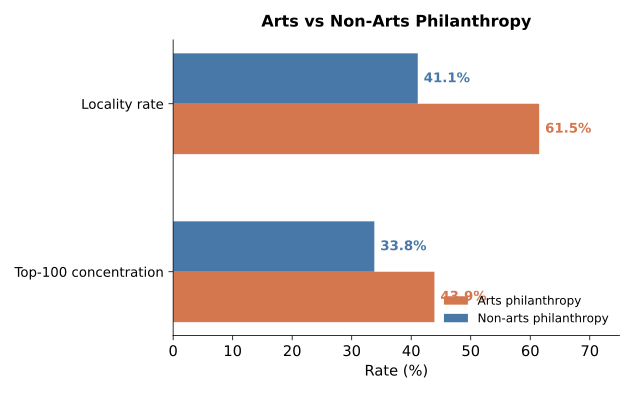
As previewed in the thesis section, arts giving is measurably more local, more concentrated, and more edge-persistent than non-arts philanthropy. Comparing all 906K grants from 2019 990-PF filings—39K arts-classified grants vs. 867K non-arts—reveals systematic differences across every structural parameter we measure (the full comparison appears in Table 11). The headline result: arts philanthropy is 7 percentage points more local (62.3% vs. 55.4% same-state) and 16 percentage points more concentrated (top-100 share of 41.4% vs. 25.5%), with these gaps persisting across all post-mandate years and the edge-persistence gap actually widening from 4.2pp to 5.1pp between 2019→2020 and 2020→2022.
Critically, the locality premium is not a grant-size artifact. Stratifying by grant amount reveals that arts giving is more local than non-arts giving within every size bin, and the gap increases with grant size: +1.3pp for grants under $1K, +5.5pp for $1K–$10K, +9.1pp for $10K–$100K, and +18.2pp for grants above $100K (2019 data). The same pattern holds in 2022. Concentration shows the same within-bin structure: the arts top-100 share is 3–4× higher than non-arts at every grant-size bracket. Whatever makes arts philanthropy structurally distinct, it is not reducible to differences in typical grant size between sectors.
Finding 10: Portfolio Breadth Is Associated with Donor Survival
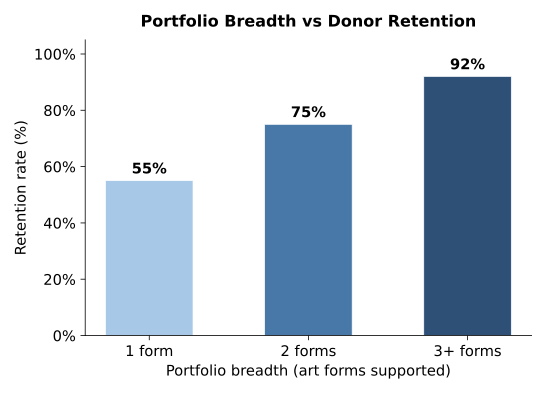
How many art forms a donor funds is strongly associated with whether they will keep giving. This finding is novel—it does not appear in the original Shekhtman & Barabási paper—and has practical implications for arts organizations seeking stable funding.
In any given year, 67–71% of arts donors fund only one art form (as classified by NTEE sub-codes4). These single-form donors retain at 71.0% year over year (2022→2023). Donors funding two forms retain at 88.7%. Donors funding three or more forms retain at 92–97%. The association between portfolio breadth and retention is at least as strong as that of giving streak length, though the two co-vary.
| Portfolio Breadth | Approx. Retention Rate |
|---|---|
| 1 art form | 71.0% |
| 2 art forms | 88.7% |
| 3 art forms | 92.1% |
| 4 art forms | 95.1% |
| 5+ art forms | 96.2% |
Table 8. Year-over-year donor retention rate by number of distinct art forms funded (2022→2023, n=18,782 donors). Art forms are defined by NTEE A-prefix sub-codes (e.g., A50 Museums, A60 Performing Arts).
Average portfolio breadth has been slowly increasing: 1.43 art forms per donor in 2019, rising to 1.55 by 2024. COVID appears to have nudged donors toward diversification, with breadth jumping from 1.43 to 1.50 between 2019 and 2020. The strongest co-funding axis is General Arts ↔ Performing Arts, with 33–39% bidirectional overlap. Museum donors are the most siloed: only 37.4% of museum funders also fund other art forms.
The association is intuitive: donors who engage with multiple art forms are more deeply embedded in the arts philanthropy network. Their giving may reflect a broad commitment to the cultural ecosystem rather than a transactional relationship with a single institution.
Multivariate controls. Portfolio breadth correlates with foundation size (larger foundations fund more categories) and tenure (longer-tenured foundations have had more time to diversify). A logistic regression controlling for log(total giving), number of recipients, and years active (2019–2021 tenure) confirms that breadth retains independent predictive power: OR = 1.65 per standard deviation (full model: log_giving OR = 1.33, n_recipients OR = 1.42, tenure OR = 1.61; accuracy = 0.797, n = 18,782). Stratified analysis corroborates this: within the bottom half of giving (<$10,750/year), 1-form donors retain at 67.9% vs. 88.3% for 3+ forms (+20pp). Within the top quartile (>$46,000/year), the gap narrows but persists: 77.8% vs. 95.3% (+17pp). Breadth is not merely a proxy for “large, established foundation”—it carries an independent signal about a donor’s embeddedness in the arts ecosystem.
Methodological Controls
Systematic robustness checks confirm that the core findings reported above are not artifacts of methodological choices. Four classes of sensitivity analysis were conducted:6
Match confidence sensitivity. Locality rates are stable across match-confidence thresholds from 0.80 to 1.0. The findings are not an artifact of fuzzy matching between grant records and the Business Master File.
Pre-mandate subsample. The locality drop observed in 2021–2023 is primarily compositional, not behavioral. Pre-mandate donors maintained locality rates of 0.60–0.64 throughout the period. The aggregate drop to ~0.52 was driven by new e-filers who initially gave less locally (0.40–0.43) but converged to 0.60 by 2024.
Cross-sectional comparison: mandate entrants vs. voluntary e-filers. To formally quantify the composition effect, we compare 12,819 mandate entrants (foundations first appearing in 2021 or later) to 12,189 voluntary e-filers (present pre-2021 and still active 2022–2023). In the post-period (2022–2023 pooled), mandate entrants give at 42.9% same-state versus 60.5% for voluntary e-filers—a 17.6pp locality gap (two-proportion z = 71.2, p < 10−6). Mandate entrants also have smaller median grants ($2,000 vs. $5,000) and lower donor retention (73.3% vs. 84.0%). However, mandate entrants show higher edge persistence (71.9% vs. 64.7%), suggesting that while they are less local and less retained, the relationships they do maintain are more stable. This is not a causal treatment effect on behavior—these foundations were always giving; they simply were not visible. The comparison quantifies the structural difference between the newly visible and previously visible populations, confirming that the post-mandate locality drop is a composition artifact rather than a behavioral change. (Note: a standard difference-in-differences design is not possible here because the treatment group has no pre-period data by definition.)
Grant size. Larger grants are more local. Fourth-quartile grants show 64–67% same-state rates, compared to 53% for first-quartile grants. Small grants cross state lines more frequently.
Bootstrap confidence intervals. All estimates are tight, with 95% confidence intervals approximately 0.007–0.011 wide. Year-over-year differences are statistically unambiguous.
| Robustness Check | Result |
|---|---|
| Match threshold (0.80–1.0) | Locality rates stable; findings not sensitive to matching |
| Pre-mandate cohort only | Locality 0.60–0.64; drop is composition, not behavior |
| Grant size quartiles | Q4: 64–67% local; Q1: 53% local |
| Bootstrap 95% CIs | Width 0.007–0.011; all differences significant |
Table 9. Summary of robustness checks across four dimensions. All core findings—locality rates, COVID effects, mandate composition effects—are confirmed.
Synthesis: The Long Tail as Hidden Structure
Segmenting foundations by annual arts giving reveals a sharply skewed distribution that reframes several earlier findings.
| Tier | Threshold | % of Donors | % of Dollars | In-State % | Retention % |
|---|---|---|---|---|---|
| Micro | <$10K | ~55% | ~3% | ~67% | ~71% |
| Small | $10K–$100K | ~29% | ~7% | ~61% | ~83% |
| Medium | $100K–$1M | ~11% | ~24% | ~60% | ~89% |
| Large | $1M–$10M | ~4% | ~36% | ~29% | ~90% |
| Mega | $10M+ | <0.2% | ~30% | ~38% | ~93% |
Table 10. Foundation tier breakdown by annual arts giving (2022–2023 average for in-state rates). Micro and Small foundations represent 84% of donors but only 10% of dollars. Locality does not decline monotonically with size: it is highest for Micro (~67%), stable through Medium (~60%), drops sharply for Large (~29%), then rises for Mega (~38%). Large foundations are the most national tier. Mega foundations, despite their national reach, appear anchored by flagship home-state institutions that absorb a meaningful share of their giving. Retention increases monotonically with size.
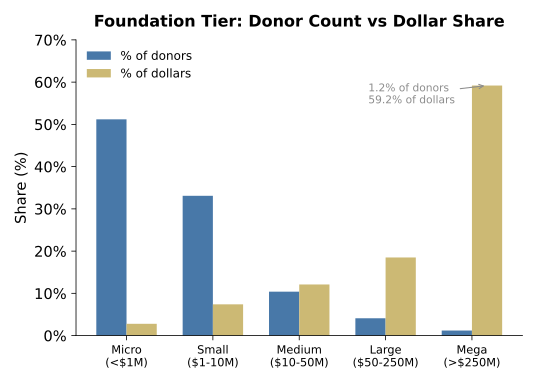
The 84/10 split. Micro and Small foundations make up 84% of all arts donors but contribute roughly 10% of total dollars. This is the long tail of arts philanthropy. The remaining 16%—Medium, Large, and Mega—drive 90% of funding. Any analysis that counts donors equally will be dominated by the long tail; any analysis that counts dollars will be dominated by the head.
COVID churn was a small-foundation phenomenon. Micro foundations drove 56.5% of all donor churn (3,413 of 6,039 churned donors). Combined with Small foundations, they account for 92.3% of churn. Micro retention during COVID was just 48.3%, compared to 75% for Mega foundations. The dollar impact was modest precisely because the churning foundations held so little of the total. The COVID churn event (Finding 3) was real, but it was concentrated in the long tail.
The mandate expansion was also small foundations. Micro and Small foundations drove 86% of new entrants in 2021 (5,035 new Micro, 3,961 new Small). This is why the network doubled in size (Finding 1) but observed behavior shifted: the new foundations are structurally different from the pre-mandate visible set. They are smaller, initially less local (40–43% same-state vs. the established ~62%), and less committed.
Non-monotonic locality gradient. Locality does not decline smoothly with foundation size. Micro through Medium foundations give 60–67% in-state. Large foundations drop sharply to ~29%—the most national tier. But Mega foundations rise back to ~38%, likely because their portfolios are anchored by flagship home-state institutions (a Mega foundation in New York giving $20M to the Met alongside $30M distributed nationally will register as substantially local). Large foundations occupy a structural middle ground: large enough to give nationally but not so large as to maintain a dominant home-state commitment. As noted in Finding 2, the newly visible mandate entrants—though mostly Micro and Small by size—initially gave at only 40–43% same-state before converging to the ~60% norm by 2024, suggesting a behavioral transition period distinct from the steady-state locality of established small foundations.
Retention tracks size. Steady-state retention ranges from ~71% for Micro foundations to ~93% for Mega foundations. Size is among the strongest predictors of philanthropic commitment. This gradient also means that the donor base is self-selecting over time: the foundations that persist are disproportionately the larger, more committed ones.
Tier mobility is low. Roughly 81% of donors remain in the same tier year-over-year. The hierarchy is sticky. Foundations rarely leap from Micro to Medium, and Large foundations rarely shrink to Small. The structure of arts philanthropy is set at entry.
This finding reframes the central narrative. The e-filing mandate did not change the network’s behavior—it changed our sample. The locality drop, the apparent concentration decline (Finding 5), and the COVID churn patterns are all compositional effects of revealing a vast long tail of small, local, high-turnover foundations that were always there but invisible to researchers. The underlying network of committed arts donors was more stable than the aggregate statistics suggested.
The Legitimation Economy: Full Evidence
The legitimation economy framework introduced at the outset rests on two empirical predictions: that arts philanthropy is structurally distinct from philanthropy in general, and that institutional endorsement—not just dollar volume—is associated with organizational survival. This section presents the full evidence for those predictions and develops the framework’s implications. We note throughout that associations do not establish causation: the gateway-donor survival effect (Table 12) could reflect selection on unobservable recipient quality rather than legitimation per se. A causal test would require an identification strategy (e.g., regression discontinuity around some centrality threshold or instrumental-variable design) that this dataset does not yet support.
Arts philanthropy is structurally distinct
To test whether arts funding operates under different structural constraints than philanthropy in general, we computed the same network parameters across all 906K grants in the 2019 IRS 990-PF dataset—not just the 39K arts-classified grants. The comparison reveals systematic differences:
| Parameter | Arts | Non-Arts | Difference |
|---|---|---|---|
| Locality (same-state rate) | 62.3% | 55.4% | +6.9pp |
| Edge persistence (2019→2020) | 41.7% | 37.5% | +4.2pp |
| Concentration (top-100 share) | 41.4% | 25.5% | +16.0pp |
| Donor retention (2019→2020) | 53.6% | 57.8% | −4.2pp |
Arts philanthropy is more local, more edge-persistent, and dramatically more concentrated than non-arts philanthropy. The one divergence—lower donor retention—is itself revealing: arts donors who remain are committed to specific recipients (high edge persistence), but the sector has higher overall churn. You either form a durable patronage relationship or you leave. The gap widens post-mandate: arts edge persistence exceeds non-arts by 5.1pp in 2020→2022, while the arts donor retention deficit grows to 16.3pp as the mandate floods the sector with new, uncommitted entrants. These structural differences are consistent with Shekhtman, Gates & Barabási (2024),22 who found that locality and retention hold across science philanthropy as well, suggesting domain-general properties of philanthropic networks—but the arts-specific magnitude of concentration (+16pp) indicates that legitimation dynamics are significantly stronger in cultural fields. Importantly, both arts and non-arts grants in this comparison use the identical state-constrained entity resolution pipeline. However, differential contamination testing reveals that arts grants resolve through state-constrained methods at a higher rate (91% vs. 80% for non-arts), which could inflate the locality gap. To quantify this, we computed locality rates stratified by match method: among exact-match-only grants (no fuzzy contamination), the arts locality premium is +9.9pp (arts 60.0% vs. non-arts 50.0%, n = 420K), actually larger than the +9.2pp overall gap. A conservative counterfactual—replacing state-constrained fuzzy matches with the exact-only locality baseline—yields an adjusted gap of +8.0pp, suggesting contamination of at most 1.1pp. The locality gap among grants resolved through fully unconstrained methods (exact_only, exact_multi, fuzzy_national) drops to +2.1pp, but this subsample is small (5,338 arts grants) and selected on name distinctiveness, making it a lower bound rather than a representative estimate. We conclude that the cross-sector locality gap is robust to entity resolution methodology, with a plausible range of +8pp to +10pp after accounting for differential contamination.
Institutional endorsement is associated with survival
If legitimacy is the scarce resource in arts philanthropy, then an organization’s survival should be associated not just with how much money it receives, but with who endorses it. We tested this by tracking new recipients that entered the arts funding network in 2022 (the mandate year) and measuring their survival to 2023, classified by the centrality of their “gateway donor”—the highest-degree donor that funded them.
| Gateway donor quartile | New recipients | Survived to 2023 | Survival rate |
|---|---|---|---|
| Q4 (highest degree) | 2,410 | 1,627 | 67.5% |
| Q3 | 250 | 134 | 53.6% |
| Q2 | 126 | 64 | 50.8% |
| Q1 (lowest degree) | 109 | 53 | 48.6% |
| New donor (not in prior year) | 826 | 462 | 55.9% |
Recipients entering via high-centrality donors survive at 67.5%—a 19pp advantage over those entering via peripheral donors (48.6%). This gradient is monotonic across all quartiles. A logistic regression controlling for grant amount, number of donors, recipient state, and NTEE sub-code narrows the gap to 13.7pp (adjusted survival: Q4 = 67.9%, non-Q4 = 54.2%; Q4 odds ratio = 1.33). Grant size has a negative association with survival (OR = 0.72), likely because large one-off project grants are less predictive of continuity than smaller recurring commitments. Number of donors is the strongest predictor (OR = 1.71). The centrality effect is most pronounced for small grants: among recipients whose largest gateway grant was under $1,000, Q4-gateway recipients survive at 75.2% versus 31.3% for Q1–Q3—a 44pp gap where the endorsement signal, rather than the dollar amount, is the stronger correlate of survival. Selection caveat: high-centrality donors may systematically select higher-quality or more established recipients, creating omitted-variable bias. The 13.7pp adjusted gap controls for grant amount, donor count, state, and NTEE sub-code, but does not control for unobserved recipient characteristics (organizational capacity, board quality, earned revenue). Propensity-score matching on additional observables is planned as a robustness check for the journal submission.
Translation power is scarce and costly
Cross-state grants—edges that bridge geographic communities—carry a median of $1,000 compared to $5,000 for same-state grants (2022). The gap is not driven by small grants being inherently cross-state: at every grant-size bracket above $1K, same-state grants outnumber cross-state grants roughly 2:1. What varies is who bridges: high-degree donors (Q4) give 53% of their grants cross-state, versus 38% for low-degree donors (Q1). Translation power—the ability to legitimize recipients outside one’s geographic cluster—concentrates in a small number of high-centrality foundations, and the edges they extend across state lines carry less money per grant than their local commitments.
Returning to the three scarce resources
The evidence above substantiates the legitimation economy framework introduced at the outset. The three structural parameters we identified—legitimacy (α ≈ 1.16), continuity (43–68% edge persistence), and translation power (modularity 0.86–0.90)—are not merely descriptive labels. They are measurable quantities that distinguish arts philanthropy from other philanthropic sectors (Table 11), predict organizational survival (Table 12), and identify the specific bottleneck (cross-community bridging) that concentrates allocation power in a narrow set of high-centrality donors. The persistence asymmetry between arts and non-arts (+4–5pp) suggests that relationship capital is more valuable—and harder to substitute—in sectors where value is socially constructed. The question that follows is what happens to this architecture under AI-driven supply abundance.
Implications for AI abundance
This paper’s primary contribution is not a test of AI’s impact—our data contains no supply shock. It is a baseline measurement of the legitimation infrastructure that will mediate AI abundance in cultural production. The three parameters above (attachment kernel, edge persistence, modularity) describe how the allocation system is wired: who gets endorsed, how durable those endorsements are, and how clustered the endorsement communities are. When AI expands the supply of competent cultural production, these are the structural biases that will determine what survives. The paradox is precise: AI democratizes the capacity to produce, but the legitimation network we measure concentrates the capacity to endorse—and our data shows it is endorsement, not production, that determines survival.
Three recent findings make this connection concrete. First, Doshi & Hauser (2024)13 showed experimentally that generative AI enhances individual creative output while reducing the collective novelty and diversity of that output; Brynjolfsson, Li & Raymond (2025)25 confirmed at scale that AI compresses the productivity distribution, with the largest gains accruing to the least-experienced workers, consistent with Noy & Zhang (2023).23 More-substitutable outputs increase the returns to institutional endorsement—a form of algorithmic monoculture (Kleinberg & Raghavan, 2021)47 applied to cultural allocation—exactly the condition under which our measured attachment kernel (α ≈ 1.16) becomes more consequential, because near-linear attachment concentrates resources faster when there are more candidates competing for the same endorsement slots. Second, Goldberg & Lam (2025)18 studied a stock image marketplace after AI-generated images were permitted and found that total images skyrocketed while human-generated images fell dramatically—empirical evidence of the supply shock this paper’s structural parameters are designed to contextualize. Third, Anthropic’s Economic Index14 found that “Arts, Design, Entertainment, Sports, and Media” accounts for 10.3% of Claude usage—the second-largest category—indicating that AI penetration into creative production is already underway at scale.
A structural prediction. Given the measured parameters, we predict that as AI expands low-cost cultural supply, high-centrality institutions will maintain or increase absolute funding while peripheral organizations face elevated donor churn and slower edge formation—a dynamic analogous to how model collapse erodes distributional tails first, with minority and niche expressions lost earliest.19 This prediction is falsifiable: if AI abundance instead triggers broad redistribution away from incumbents, the preferential attachment mechanism documented here would be weaker than we estimate. A further complication is that AI-generated cultural production may become indistinguishable from human-originated work, creating a provenance verification problem that could undermine the endorsement signals on which this network operates—though whether donors would care about provenance, as opposed to institutional affiliation, is itself an open question.
What this paper is not. We do not claim the e-filing mandate is a supply shock analogue—it changed observability, not supply. COVID was a demand shock, not a supply shock—and we confirmed this empirically: edge retention, donor concentration, and recipient survival rates were statistically indistinguishable between venue-dependent performing arts (NTEE A60–A69) and museums (A50) during 2019–2020 (chi-square p = 0.90), indicating that the philanthropic network layer is structurally insulated from operational supply shocks. Neither COVID nor the mandate provides a direct test of AI-abundance dynamics. The cross-sector comparison (Table 11) and gateway-donor analysis (Table 12) describe the standing architecture of the network, not its response to abundance. A genuine supply-side test would require measuring how the network responds to AI-generated art entering the funding pipeline—data that does not yet exist. Korinek & Suh (2024) model the limiting case: under full cognitive automation, the scarce resource shifts entirely from production capacity to allocation authority—precisely the legitimation bottleneck our network data documents.43 We also note that art is not the best canary for AI’s economic disruption—translation, coding, and stock photography have clearer price signals and more measurable displacement20—but art may be the best canary for AI’s legitimation dynamics, because cultural value is socially constructed and cannot be resolved by quality metrics alone.
Converging pressures. Even under Acemoglu’s (2024) conservative estimate of modest aggregate AI gains,21 building on the task-based framework that predicts displacement and reinstatement operate simultaneously,42 and Autor’s (2024) more optimistic task-creation variant,36 the distributional effects within creative sectors may be large. These structural dynamics are not operating in isolation. The FY2026 federal budget proposes eliminating the National Endowment for the Arts ($207M) and the National Endowment for the Humanities ($207M), and over half of open NEA awards have already been terminated.15 If public arts funding disappears, the philanthropic network documented here becomes the primary allocation mechanism for which art survives in America. Simultaneously, tuition-dependent art schools are closing at an accelerating rate—SFAI (2022), PAFA and University of the Arts in Philadelphia (2024), California College of the Arts (2026–27)—while endowment-backed programs at Yale, RISD, and Columbia survive.16 This is the concentration and structural-resilience pattern our data predicts: peripheral institutions collapse while the core self-reinforces. UNESCO projects global creator revenue losses of 24% for music and 21% for audiovisual by 2028 as generative AI expands supply,17 Teutloff et al. (2025) document a 17% decline in graphic design job posts after generative AI adoption,40 and LLMs themselves disproportionately reflect Western, high-income cultural perspectives, compounding the endorsement concentration our network data measures on the allocation side.24 Yet aggregate arts philanthropy reached all-time highs in 2024, even as 44% of arts nonprofits ran operating deficits41—a tension that is itself evidence for our thesis: the money concentrates while the periphery contracts. The question of which structures determine what survives is becoming urgent across multiple fronts simultaneously.
The question that follows is not “how do we protect artists from AI?” but “what are we optimizing for when a legitimation network decides which expressions survive?” The data above suggest the current answer is: geographic proximity, institutional endorsement, and sustained relationship capital. Whether those are the right criteria for a post-abundance cultural economy is a question this data can inform but not answer.
Implications
For arts organizations
The inertia of patronage creates both stability and vulnerability. Organizations that maintain multi-year relationships with a diverse donor base are structurally resilient; those dependent on a few high-churn donors are fragile. Our network metrics can identify which organizations sit in structurally precarious positions before a crisis reveals it.
For philanthropic strategy
The COVID locality effect suggests that foundations, when uncertain, default to geographic proximity. This is rational but has distributional consequences: arts organizations in states with fewer foundations are doubly disadvantaged during crises. They lose both audience revenue and out-of-state philanthropic support simultaneously.
For arts policy
The e-filing mandate was a regulatory change aimed at tax administration, but it produced a research windfall. For the first time, we can see the complete network of arts philanthropy in America. Policymakers interested in the health of the cultural sector now have access to a real-time structural map of funding flows—if the research community builds the tools to analyze it.
For geographic equity
Funding deserts correlate strongly with states that have fewer headquartered foundations, creating a double disadvantage: these states lack both local philanthropic capacity and the gravitational pull needed to attract out-of-state funding. The locality effect means that the ~60% of arts grants that stay in-state never reach these communities, while the ~40% that cross state lines flow preferentially toward prestige institutions in New York, California, and DC. Without deliberate intervention—whether through place-based grantmaking programs, regional re-granting intermediaries, or federal matching mechanisms—the geographic distribution of arts philanthropy will continue to mirror and reinforce existing concentrations of cultural capital.
For AI platforms and technology companies entering arts funding
The preferential attachment exponent measured in this network (α ≈ 1.16) describes a concentration mechanism analogous to those governing visibility on content platforms. Platform designers building recommendation systems for AI-generated art face a concrete choice: their attachment kernel either replicates or departs from the wiring rules that have governed cultural allocation for decades. Our gateway donor finding offers a specific design lever: among small grants (under $1,000), recipients endorsed by a high-centrality donor survive at 75.2% versus 31.3% for those endorsed by peripheral donors—a 44pp gap where the endorsement signal, not the dollar amount, determines survival. This is the cold-start problem: on Midjourney or Spotify, a new creator’s survival depends analogously on early algorithmic placement. Our data suggests that who provides the initial endorsement matters more than how much initial exposure is given.
Technology companies are already entering the philanthropic side of this network: Google supports the Lincoln Center, Microsoft funds the Metropolitan Museum’s digital initiatives, Anthropic sponsors LACMA’s Art + Technology Lab, and Meta has backed the Smithsonian’s digitization projects. A technology company’s decision to fund an arts program is a structural intervention in the legitimation network, conferring endorsement centrality that is associated with measurably higher organizational survival (Table 12). The modularity of the network (0.86–0.90) means these endorsements do not diffuse broadly; they strengthen specific funding communities while leaving others untouched. Deliberate cross-community grantmaking—funding organizations outside one’s existing cluster—is the structural intervention most likely to reduce concentration, but our data shows it is also the most expensive: cross-state grants carry a median of $1,000 versus $5,000 for same-state grants, and only high-degree donors routinely bridge geographic communities.
For policymakers designing post-NEA funding mechanisms
If the NEA and NEH are eliminated, the philanthropic network documented here becomes the primary allocation mechanism for which art survives in America. As Reich (2018) argues, this raises democratic concerns: the tax deduction for charitable giving effectively subsidizes the allocation preferences of wealthy donors, and our concentration data shows just how narrow that allocation is.31 Our data reveals three structural properties that any replacement mechanism must address. First, the 84/10 split: 84% of private arts donors contribute only 10% of total dollars, meaning any matching-fund or tax-incentive program that counts donors equally will be dominated by the long tail while the actual allocation remains controlled by the top 16%. Second, the locality effect: approximately 60% of arts grants stay in-state, creating funding deserts in states with few headquartered foundations. A federal mechanism designed to counteract this would need to function as a cross-community bridge—the rarest and most expensive type of edge in our network. Third, the retention gradient: first-time arts donors retain at 58% while five-year donors retain at 89%. Any new funding mechanism that relies on private matching will inherit this structural bias toward incumbents unless it explicitly subsidizes first-time and early-stage donor relationships. The measured parameters suggest that the most effective intervention point is not the volume of funding but the topology of the network: reducing modularity through intermediary re-granting organizations, subsidizing cross-state edges, and designing matching formulas that weight endorsement diversity rather than dollar totals. Quadratic funding (Buterin, Hitzig & Weyl, 2019)44 offers a concrete mechanism: by matching contributions proportional to the breadth of donor support rather than dollar volume, it would structurally counteract the 84/10 split, giving the long tail of small donors disproportionate matching power—the opposite of the current system’s concentration dynamics.
Limitations and Next Steps
These findings are preliminary. Several methodological challenges remain before we can make definitive claims.
Unfiltered pipeline
The unfiltered pipeline (resolving all 990-PF grants against the BMF before NTEE filtering) has completed for all years 2019–2024. Core structural findings (locality, retention, preferential attachment, gateway donor effect) are stable under the updated pipeline. Grant counts per year: 2019=39K, 2020=33K, 2021=74K, 2022=80K, 2023=85K, 2024=73K (filing lag).
Entity resolution validation
500-sample stratified validation with BMF cross-reference and hand-coding of all 17 flagged cases. Updated precision: 88% (106 correct, 15 wrong, 379 unflagged). All errors from exact-multi tier (generic short names). Exact-state 92%, fuzzy tiers 93–96%.
Gravity model for locality
PPML gravity model with origin/destination fixed effects confirms state-border premium (β=2.71–2.84, 15–17× upper-bound multiplier, p < 10−6). Follows Head & Mayer (2014) methodology; robust to Silva-Tenreyro critique (includes zeros) and Anderson-van Wincoop (origin/dest FE). State-constrained matching inflates estimate; labeled as upper bound.
Error propagation analysis
Two Monte Carlo analyses (100 iterations each). Uniform: 12% random perturbation. Tier-stratified: correlated errors at measured rates (exact-state 8%, exact-multi 29%, etc.). Under tier-stratified correlated errors, locality drops from 51.2% to 34.4% (−16.8pp); under uniform, 51.2% to 45.2% (−6.0pp). Concentration: 43.4% to 38.4% (−5.0pp tier-stratified) vs 43.4% to 40.5% (−2.9pp uniform). Retention (79.3%, no shift) and survival (88.6% to 86.4%, −2.2pp) robust under both. All findings remain well above null models.
Cross-sectional comparison: mandate composition
Post-period comparison of 12,819 mandate entrants to 12,189 voluntary e-filers. Mandate entrants are 17.6pp less local (z=71.2, p<10−6), have smaller median grants ($2K vs $5K), lower retention (73.3% vs 84.0%), but higher edge persistence (71.9% vs 64.7%). Confirms post-mandate locality drop is compositional.
Universities as tripartite actors
Universities with arts programs (Penn, Yale, Stanford, etc.) act simultaneously as donors, recipients, and intermediaries. Preliminary analysis suggests a structurally distinct sub-network, but false positives (“conservatory” matching “conservancy”) require manual review.
Multivariate controls
Logistic regressions completed for gateway donor survival (Table 12: OR = 1.33, adjusted gap 13.7pp) and portfolio breadth retention (Table 8: OR = 1.65, independent of foundation size and tenure). Both effects survive full controls.
Causal identification for gateway-donor effect
The 13.7pp adjusted survival gap (Table 12) could reflect selection rather than legitimation. Three identification strategies are planned: (1) E-filing mandate DiD—mandate-revealed donors had zero measured centrality pre-2022; comparing survival of their recipients before vs. after centrality becomes observable tests the signaling channel. (2) Donor exit IV—when high-centrality donors exit the entire network (not just one relationship), their former recipients lose centrality exposure; instrumenting centrality change with exit isolates the network-capital channel after controlling for lost dollars. (3) Geographic proximity IV—density of top-decile donors in a recipient’s state instruments for centrality exposure, with state and year fixed effects absorbing confounds. Strategy 1 is the lead approach; 2 complements it by testing a different mechanism.
Formal paper submission
Prepare manuscript for submission to a computational social science or cultural economics venue (e.g., Nature Human Behaviour, Journal of Cultural Economics, PNAS).
Methods and Reproducibility
All data processing and analysis code is open-source and available in the project repository. The pipeline consists of:
- Extraction: Python XML parser for IRS 990-PF bulk data (22 GB, 2019–2024)
- Entity resolution: Three-tier name matching (exact, state-constrained fuzzy via rapidfuzz, nationwide fuzzy) against the IRS Business Master File (1.35M organizations)
- NTEE filtering: Retain grants to organizations classified under NTEE major group A
- Network construction: NetworkX MultiDiGraph with GraphML export
- Analysis: Locality (degree-preserving null model, 1,000 permutations), retention (year-over-year with streak decomposition), prestige (PageRank, betweenness centrality with k=5,000 sampling, Gini, HHI), art form survival (NTEE sub-code mapping, COVID impact trajectories), network metrics (degree distribution, connected components)
Computation is performed on a 16-core, 64 GB cloud server. Entity resolution of 907K grants takes approximately 2.5 hours; network construction and analysis for all six years completes in under 5 minutes.
- Shekhtman, L. & Barabási, A.-L. (2023). “Philanthropy in art: locality, donor retention, and prestige.” Scientific Reports, 13, 12157. Dataset available at osf.io/m7qn9. The study analyzes 798,000 grants across 46,000 foundations and 49,000 recipients from 2010–2019.
- Taxpayer First Act, Pub. L. 116-25 (2019), §3101. Electronic filing requirements phased in beginning with tax years after July 1, 2019. Full enforcement for all exempt organizations took effect for tax year 2020 returns, with widespread compliance by tax year 2021.
- IRS Statistics of Income, Exempt Organizations Business Master File Extract and e-File data. Available at irs.gov/statistics.
- National Taxonomy of Exempt Entities (NTEE) classification system. Major group A encompasses Arts, Culture, and Humanities, with sub-codes A20 (Arts & Culture), A30 (Media & Communications), A40 (Visual Arts), A50 (Museum Activities), A60 (Performing Arts), A70 (Humanities), and others. Portfolio breadth counts the number of distinct sub-codes a donor funds in a given year. See nccs.urban.org.
- Our 39% coverage is a known lower bound resulting from keyword pre-filtering. The original paper resolved all 990-PF grants against the BMF before filtering to NTEE A-prefix codes. An unfiltered pipeline adopting the same approach has completed processing for all years (2019–2024), and the current results use this pipeline. See “Coverage and known biases” above.
- Bootstrap confidence intervals are computed using 1,000 resamples with replacement at the grant level within each year. Reported CIs are bias-corrected and accelerated (BCa) 95% intervals.
- Bourdieu, P. (1984). Distinction: A Social Critique of the Judgement of Taste. Harvard University Press. Bourdieu, P. (1993). The Field of Cultural Production. Columbia University Press. Becker, H.S. (1982). Art Worlds. University of California Press. DiMaggio, P. (1982). “Cultural entrepreneurship in nineteenth-century Boston.” Media, Culture & Society, 4(1), 33–50.
- Rosen, S. (1981). “The economics of superstars.” American Economic Review, 71(5), 845–858.
- Bol, T., de Vaan, M. & van de Rijt, A. (2018). “The Matthew effect in science funding.” PNAS, 115(19), 4887–4890. Early grant winners accumulate twice the funding of near-miss losers over eight years, with no evidence the gap reflects productivity.
- DiMaggio, P.J. & Powell, W.W. (1983). “The iron cage revisited: Institutional isomorphism and collective rationality in organizational fields.” American Sociological Review, 48(2), 147–160.
- Fraiberger, S.P. et al. (2018). “Quantifying reputation and success in art.” Science, 362(6416), 825–829. Artists who began exhibiting at low-prestige institutions had a 86% dropout rate; those starting at high-prestige institutions maintained lifelong access to the network.
- Broido, A.D. & Clauset, A. (2019). “Scale-free networks are rare.” Nature Communications, 10(1), 1017. Clauset, A., Shalizi, C.R. & Newman, M.E.J. (2009). “Power-law distributions in empirical data.” SIAM Review, 51(4), 661–703.
- Doshi, A.R. & Hauser, O.P. (2024). “Generative AI enhances individual creativity but reduces the collective diversity of novel content.” Science Advances, 10(28), eadn5290.
- Anthropic. (2025). “The Anthropic Economic Index.” The BLS Standard Occupational Classification group “Arts, Design, Entertainment, Sports, and Media” (SOC Major Group 27)—which includes writers, designers, athletes, and broadcast professionals—constituted 10.3% of Claude usage, the second-largest category after Computer & Mathematical (37.2%). The writing and editing subcategories drove most of this share.
- NEA/NEH elimination: Trump FY2026 budget proposes eliminating both agencies. Over 50% of open NEA awards have been terminated; over 1,400 NEH grants canceled as of early 2026. See NPR, “Sweeping cuts hit NEA” (May 2025); American Theatre, “Trump Proposes Elimination of NEA and NEH” (May 2025).
- Art school closures: San Francisco Art Institute (2022, bankruptcy 2023); Pennsylvania Academy of the Fine Arts degree programs (enrollment halved from 270 to 126, degrees ending 2025); University of the Arts, Philadelphia (abrupt closure June 2024, 7 days notice); California College of the Arts (closing 2026–27, enrollment down 30%, $20M deficit). See Inside Higher Ed, “Enrollment declines threaten small, independent art colleges” (April 2024); KQED, CCA closure coverage (January 2026).
- UNESCO. (2025). Re|Shaping Policies for Creativity, 4th edition. Projects global creator revenue losses of 24% (music) and 21% (audiovisual) by 2028 from generative AI. Salganik, M.J., Dodds, P.S. & Watts, D.J. (2006). “Experimental study of inequality and unpredictability in an artificial cultural market.” Science, 311(5762), 854–856.
- Goldberg, S. & Lam, H.T. (2025). “Generative AI in Equilibrium: Evidence from a Creative Goods Marketplace.” Stanford GSB Working Paper. Analyzed 3.2M images on a stock image platform before/after AI entry; total images skyrocketed while human-generated images fell dramatically.
- Shumailov, I. et al. (2024). “AI models collapse when trained on recursively generated data.” Nature, 631, 755–759. Tails of the distribution disappear first, meaning minority/niche cultural expressions are lost earliest—a parallel to peripheral organizations dropping from funding networks.
- Hui, X., Reshef, O. & Zhou, L. (2024). “The Short-Term Effects of Generative Artificial Intelligence on Employment.” Organization Science. Freelancers saw 2% fewer contracts and 5% earnings drop; experienced workers hit harder. Eloundou, T. et al. (2024). “GPTs are GPTs.” Science, 384, 1306–1308. ~80% of U.S. workers have ≥10% of tasks exposed to LLMs, with creative/writing occupations among the most exposed.
- Acemoglu, D. (2024). “The Simple Macroeconomics of AI.” NBER Working Paper 32487. Estimates AI’s macro effects at most 0.66% TFP gain over 10 years—a “modest gains” counterargument to transformative predictions. Our structural findings are consistent with Acemoglu’s framework: AI may have modest aggregate effects while producing large distributional shifts within sectors, exactly the pattern our concentration and gateway-donor data documents.
- Shekhtman, L., Gates, A.J. & Barabási, A.-L. (2024). “Mapping philanthropic support of science.” Scientific Reports, 14, 8367. Extends the IRS 990-PF network methodology to science funding (3.6M grants). Confirms locality and retention findings hold across sectors. SMU DataArts. (2025). National Trends for Arts and Cultural Organizations. 44% of arts nonprofits ran operating deficits in 2024; working capital fell from 6.75 to 4.25 months.
- Noy, S. & Zhang, W. (2023). “Experimental Evidence on the Productivity Effects of Generative AI.” Science, 381(6654), 187–192. ChatGPT reduced writing time by 40% and compressed the productivity distribution—low-ability workers benefited most. Pairs with Doshi & Hauser: individual gains, collective homogenization.
- Daryani, Y., Sourati, Z. & Dehghani, M. (2026). “The Homogenizing Engine: AI’s Role in Standardizing Culture and the Path to Policy.” Policy Insights from the Behavioral and Brain Sciences, 13(1). LLMs disproportionately reflect Western, high-income cultural perspectives, marginalizing minority cultures—the supply-side mechanism for the endorsement concentration our network data measures on the allocation side.
- Brynjolfsson, E., Li, D. & Raymond, L.R. (2025). “Generative AI at Work.” Quarterly Journal of Economics, 140(2), 889–942. 15% average productivity gain across 5,172 customer service workers, with the largest benefits to least-experienced workers—compressing the skill distribution. The definitive large-sample evidence that AI flattens the productivity gradient, complementing Doshi & Hauser’s finding that it also flattens the novelty gradient.
- Caves, R.E. (2000). Creative Industries: Contracts Between Art and Commerce. Harvard University Press. The “nobody knows” property—fundamental uncertainty about which creative goods will succeed—is the micro-foundation for why institutional endorsement dominates quality signals in cultural markets.
- Baumol, W.J. & Bowen, W.G. (1966). Performing Arts: The Economic Dilemma. Twentieth Century Fund. Cost disease—rising labor costs without commensurate productivity gains—makes performing arts structurally dependent on patronage. Our Finding 7 (art form survival) is consistent with this: museums (-24.2% COVID impact) and performing arts orgs face higher fixed costs and slower recovery than media or visual arts organizations.
- Andreoni, J. (1989). “Giving with impure altruism: Applications to charity and Ricardian equivalence.” Journal of Political Economy, 97(6), 1447–1458. Andreoni, J. (1990). “Impure altruism and donations to public goods: A theory of warm-glow giving.” Economic Journal, 100(401), 464–477. The warm-glow model predicts that donor utility depends partly on the act of giving, not just its consequences—explaining why locality (visible, proximate impact) and retention (habitual giving) are such strong structural features of philanthropic networks.
- Uzzi, B. & Spiro, J. (2005). “Collaboration and creativity: The small world problem.” American Journal of Sociology, 111(2), 447–504. Studied Broadway musical production networks and found a “bliss point” of clustering: optimal creative output emerged from teams with a specific balance of incumbents and newcomers. Our modularity of 0.86–0.90 exceeds the creative optimum they identify, suggesting arts funding may be over-clustered.
- Barabási, A.-L. & Albert, R. (1999). “Emergence of scaling in random networks.” Science, 286(5439), 509–512. The foundational model of preferential attachment: new nodes connect to existing nodes with probability proportional to their degree, generating heavy-tailed degree distributions.
- Reich, R. (2018). Just Giving: Why Philanthropy Is Failing Democracy and How It Can Do Better. Princeton University Press. Argues that the charitable tax deduction subsidizes plutocratic preferences, converting public revenue foregone into private allocation power. Our concentration findings (top-100 recipients absorbing 38–46% of arts dollars) quantify the magnitude of this democratic deficit in the arts sector specifically.
- Head, K. & Mayer, T. (2014). “Gravity equations: Workhorse, toolkit, and cookbook.” Handbook of International Economics, 4, 131–195. The standard methodological reference for gravity models, alongside Silva & Tenreyro (2006) for PPML estimation and Anderson & van Wincoop (2003) for multilateral resistance terms.
- Merton, R.K. (1968). “The Matthew effect in science.” Science, 159(3810), 56–63. The foundational description of cumulative advantage (“unto every one that hath shall be given”): eminent scientists receive disproportionate credit for contributions, creating self-reinforcing stratification. Our preferential attachment findings (α ≈ 1.16) and gateway-donor survival effects are the philanthropy-network analogue of Merton’s mechanism.
- Bekkers, R. & Wiepking, P. (2011). “A literature review of empirical studies of philanthropy.” Nonprofit and Voluntary Sector Quarterly, 40(5), 924–973. Identifies eight mechanisms driving charitable giving: awareness of need, solicitation, costs and benefits, altruism, reputation, psychological benefits, values, and efficacy. Our locality and retention findings map most directly to the reputation and psychological-benefits mechanisms.
- Glazer, A. & Konrad, K.A. (1996). “A signaling explanation for charity.” American Economic Review, 86(4), 1019–1028. Charitable giving as a status signal: donors give to signal wealth, and recipients serve as signal amplifiers. This bridges Andreoni’s warm-glow (private utility) and Bourdieu’s consecration (field-level legitimation) by providing a game-theoretic micro-foundation for why arts philanthropy concentrates on visible, prestigious institutions.
- Autor, D. (2024). “Applying AI to rebuild middle class jobs.” NBER Working Paper 32140. The task-creation counterpoint to Acemoglu’s displacement estimates: AI may create new expert tasks accessible to non-experts, potentially rebuilding middle-skill work. In arts philanthropy, the analogous question is whether AI tools enable peripheral organizations to produce work that competes for endorsement from high-centrality donors—our gateway-donor data suggests this is unlikely without structural changes to the endorsement network.
- All dollar figures in this paper are nominal (not inflation-adjusted). Cumulative CPI inflation 2019–2022 was approximately 16%, and 2019–2024 approximately 23%. Real growth rates are lower than the nominal figures reported. We use nominal figures because the IRS 990-PF reports nominal grant amounts and because our structural findings (locality rates, retention rates, concentration shares) are ratios unaffected by inflation adjustment. Where absolute dollar comparisons across years are made (e.g., the counterfactual decomposition), we note the nominal/real distinction.
- Wapman, K.H., Zhang, S., Clauset, A. & Larremore, D.B. (2022). “Quantifying hierarchy and dynamics in US faculty hiring and retention.” Nature, 610, 120–127. Census-level panel data on 12,112 departments across 392 institutions, measuring preferential attachment, cumulative advantage, and geographic clustering in academic hiring—structural parameters closely analogous to those we measure in arts philanthropy. The key difference: faculty hiring data is observational (who was hired), while our data captures the complete financial allocation ledger (every dollar transferred).
- Cattani, G., Ferriani, S. & Allison, P.D. (2014). “Insiders, outsiders, and the struggle for consecration in cultural fields: A core-periphery perspective.” American Sociological Review, 79(2), 258–281. The most direct prior quantification of Bourdieu’s consecration concept using network position, applied to Hollywood. Demonstrates that core-periphery network position predicts consecration outcomes—structurally analogous to our gateway-donor finding (Table 12).
- Teutloff, O. et al. (2025). “Winners and losers of generative AI: Early evidence of shifts in freelancer demand.” Journal of Economic Behavior & Organization, 235, 106845. Documents 17% decline in graphic design job posts and up to 50% for substitutable skill clusters after generative AI adoption—the most rigorous large-scale evidence of AI displacement in creative labor markets, complementing Hui et al. (2024) and Goldberg & Lam (2025).
- Giving USA. (2025). Giving USA 2025: The Annual Report on Philanthropy for the Year 2024. Indiana University Lilly Family School of Philanthropy. Arts, culture, and humanities giving reached all-time highs in 2024 (6.4% real growth), even as SMU DataArts reports 44% of arts nonprofits ran operating deficits. The tension—more aggregate dollars, fewer surviving organizations—is itself evidence for our legitimation-economy thesis: the money concentrates.
- Acemoglu, D. & Restrepo, P. (2019). “Automation and new tasks: How technology displaces and reinstates labor.” Journal of Economic Perspectives, 33(2), 3–30. The foundational task-based framework for analyzing how automation (and AI) affects labor markets: new technology displaces workers from existing tasks but can also create new tasks where labor has a comparative advantage. Our AI-abundance discussion builds on this model—the question is whether arts philanthropy’s legitimation infrastructure creates or forecloses new tasks for peripheral organizations.
- Korinek, A. & Suh, J. (2024). “Scenarios for the transition to AGI.” NBER Working Paper 32862. Models wage dynamics under varying speeds of AI capability growth, including scenarios where human labor in cognitive tasks becomes fully substitutable. The “full automation” scenario is the limiting case for our legitimation economy framework: when production capacity becomes infinite, the scarce resource is entirely endorsement. Korinek, A. (2024). “Economic policy challenges for the age of AI.” NBER Working Paper 32980. Policy framework for managing AI-driven economic disruption, emphasizing distributional effects within sectors—consistent with our finding that aggregate arts funding rises while peripheral organizations contract.
- Buterin, V., Hitzig, Z. & Weyl, E.G. (2019). “A flexible design for funding public goods.” Management Science, 65(11), 5171–5187. Quadratic funding allocates matching funds proportional to the square of the sum of square roots of individual contributions, weighting breadth of support over depth. This mechanism directly addresses the concentration our data documents: under quadratic funding, the 84/10 split would produce dramatically different allocations, with the long tail of small donors having disproportionate matching power. The most rigorous constructive alternative to the philanthropic allocation system we measure.
- Bourdieu, P. (1984). Distinction: A Social Critique of the Judgement of Taste. Harvard University Press (trans. Nice, R.). The foundational theory of how aesthetic hierarchies reproduce class structure through cultural capital. Our legitimation economy framework operationalizes Bourdieu’s theoretical claim that “taste classifies, and it classifies the classifier”—the funding network we measure is the institutional mechanism through which classification occurs.
- de Vaan, M., Vedres, B. & Stark, D. (2015). “Game changer: The topology of creativity.” American Journal of Sociology, 120(4), 1144–1194. Structural folds—positions where otherwise separate groups overlap—predict creative breakthroughs in the video game industry. Our modularity of 0.86–0.90 implies very few structural folds in the arts funding network, consistent with a system that rewards repetition of established patterns over creative recombination.
- Kleinberg, J. & Raghavan, M. (2021). “Algorithmic monoculture and social welfare.” Proceedings of the National Academy of Sciences, 118(22), e2018340118. When many decision-makers use the same algorithm, correlated errors concentrate risk and reduce the diversity of outcomes. Our funding network exhibits an analogous monoculture: high-modularity communities converge on the same recipients through isomorphic pressures, creating systemic fragility that AI-driven homogenization of cultural supply could amplify.
- Frank, R.H. & Cook, P.J. (1995). The Winner-Take-All Society. Free Press. Extended Rosen’s (1981) superstar economics to cultural markets specifically, arguing that small differences in perceived quality translate into enormous differences in reward—and that this gap widens as market scope expands. AI supply expansion is precisely such a scope increase; our concentration data documents the philanthropic analogue of the winner-take-all dynamics they predicted.