Where Art Lives
Density, Income, and the Geography of Arts Infrastructure in America
Abstract
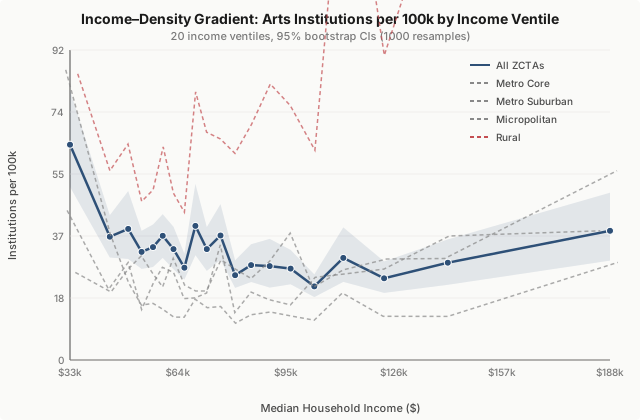
Where do America’s arts institutions concentrate, and what determines which communities have them? We link 60,643 arts organizations identified in IRS filings to Census American Community Survey data at the ZIP Code Tabulation Area (ZCTA) level, of which 26,681 (44%) matched to ZCTA-level Census data, and find that the conventional framing—wealthy areas attract the arts—obscures a more fundamental pattern. Population density, not household income, is the primary predictor of arts institution density, explaining 66% of variation in a log-linear model compared with income’s modest incremental contribution.
The urbanicity gradient is steep: metro core ZCTAs average 61 percentage points more arts institutions per capita than rural areas, while a one-standard-deviation increase in median household income predicts only an 11% increase in institution count after controlling for density. The relationship between income and arts infrastructure is not merely modest but heterogeneous across art forms: museums exhibit a negative income elasticity of −0.77 after controlling for urbanicity, concentrating disproportionately in lower-income urban ZCTAs, while media arts and general arts organizations cluster in higher-income areas. When we turn from institutional presence to funding flows, income reasserts itself: the highest-income quintile of arts-bearing ZCTAs receives 1.32 times its proportional share of grant dollars, and an Oaxaca-Blinder decomposition attributes 148% of the funding gap to unexplained location premiums—the network amplifies geographic advantage beyond what institutional composition can explain. We identify 938 arts desert ZCTAs where observed institution counts fall significantly below population-predicted levels. These deserts are not, as commonly assumed, rural; they are dense suburban communities—Houston exurbs, Southern California inland cities, Bay Area suburbs—where population growth has outpaced cultural infrastructure. A difference-in-differences analysis of the 2022 federal e-filing mandate confirms that the visibility shock was geographically neutral, leaving the underlying distribution of arts infrastructure unchanged. These findings reframe the geography of cultural access: density creates the infrastructure, funding networks concentrate its benefits within dense areas toward wealth, and the binding constraint on cultural participation is not income but proximity to the institutional apparatus of legitimation.
Key Findings
Population density, not household income, is the primary predictor of arts institution density. Urbanicity explains 66% of variation in a log-linear model. Metro core ZCTAs average 61 percentage points more arts institutions per capita than rural areas. A wealthy exurb at the 90th percentile of income has fewer arts institutions per capita than a moderate-income urban neighborhood. Income operates at the margin; density is the binding constraint.
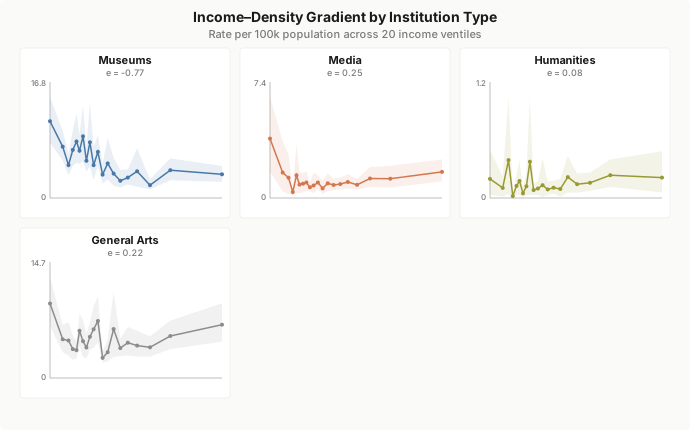
The aggregate density gradient masks striking heterogeneity across art forms. Museums exhibit a negative income elasticity of −0.77 after controlling for urbanicity—they concentrate in lower-income urban cores, anchored to historic cultural districts. Media arts organizations show a positive elasticity of +0.25, clustering where creative professionals live. The z-test comparing these coefficients is highly significant (z = 11.43, p < 0.001). Any unitary account of “arts access” obscures meaningful structural variation.
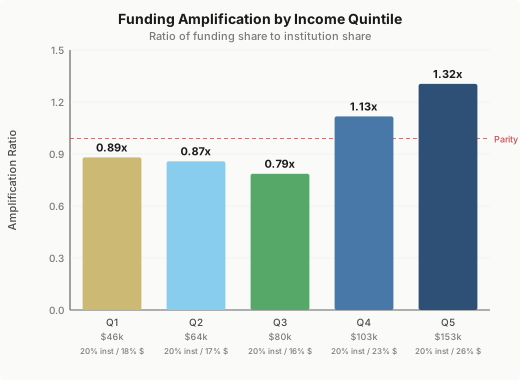
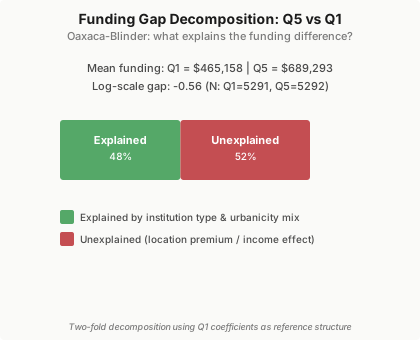
While density determines where arts institutions are, income determines how much money they receive. The highest-income quintile of arts-bearing ZCTAs receives 1.32 times its proportional share of grant dollars. An Oaxaca-Blinder decomposition attributes 148% of the Q5–Q1 funding gap to unexplained location premiums—the network amplifies geographic advantage beyond what institutional composition can explain. Middle-income ZCTAs (Q3) are the most underfunded at 0.79×, falling through both targeted philanthropy and proximity-based giving.
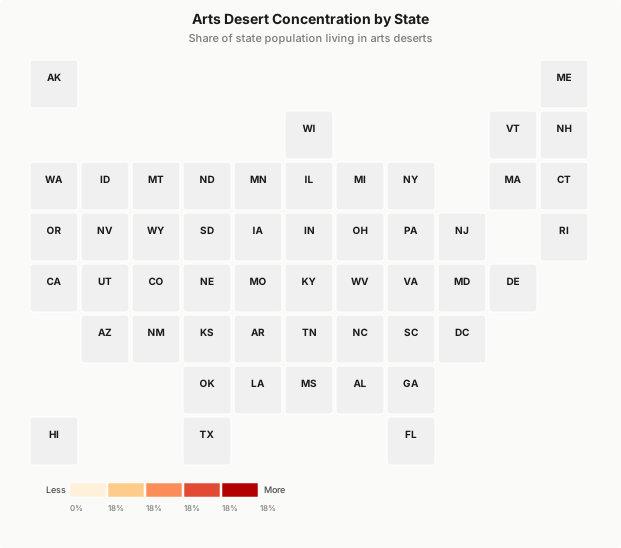
We identify 938 arts desert ZCTAs where observed institution counts fall significantly below population-predicted levels. These deserts are not rural—they are dense suburban communities: Houston exurbs, Southern California inland cities, Bay Area suburbs. ZCTA 77449 (Katy, Texas) has 122,000 people and one arts organization; it should have nearly six. The 938 desert ZCTAs are home to 24 million people, a population equivalent to the ten largest American cities combined.
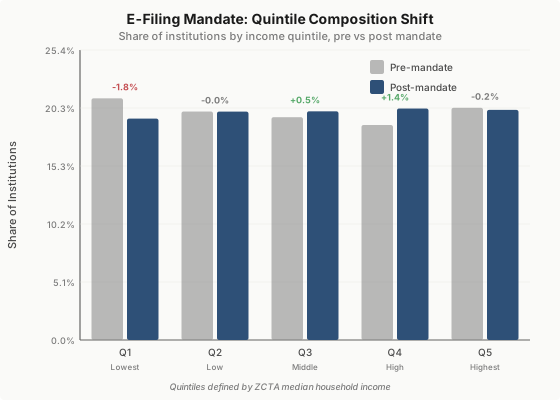
The 2022 federal e-filing mandate doubled the number of visible grant-making foundations. A Kolmogorov-Smirnov test shows the income distributions of entrant and incumbent recipient ZCTAs are nearly identical (D = 0.024). The difference-in-differences specification shows only marginal shifts: the largest is a 1.8pp decline in Q1’s funding share. The geographic distribution of arts funding is not an artifact of selective observation; it is a structural feature of the system.
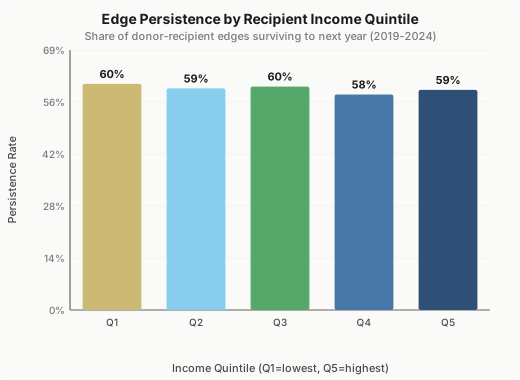
Preferential attachment is sharply concentrated by geography: the correlation between current in-degree and new edge acquisition is 0.87 in the wealthiest communities (Q5) but only 0.36 in Q3. The “rich get richer” dynamic is nearly 2.5 times stronger in high-income areas. Edge persistence, by contrast, is stable across quintiles (57.6%–60.4%). The network amplifies geographic inequality not through differential persistence but through differential attachment.
1. Introduction
ZIP Code Tabulation Area 77449 in Katy, Texas—a suburb twenty miles west of downtown Houston—is home to 122,000 people. It has one arts organization. A Poisson regression conditioning on population and income predicts it should have 5.7. ZCTA 10021, the Upper East Side of Manhattan, has a population one-fifth the size and more than fifty arts organizations.0 The per-capita ratio between these two communities exceeds 100 to 1.
The standard explanation for disparities like this invokes wealth. Rich areas attract museums, galleries, and performing arts venues because wealthy residents donate to them, attend them, and derive status from proximity to them. This account is not wrong, exactly. But it is incomplete in a way that distorts both diagnosis and prescription. When we join 60,643 arts organizations from IRS records to Census demographic data at the ZCTA level and estimate a model of institutional density, income is a significant but modest predictor. What dominates is population density—the sheer fact of people living close together. Metro core ZCTAs have 61 percentage points more arts institutions per capita than rural areas, a gap that income cannot close. A rural ZCTA at the 90th percentile of household income has fewer arts institutions per capita than an urban ZCTA at the 10th percentile.
This is not the paper we expected to write. The original hypothesis, motivated by the geographic concentration documented in our companion paper on arts philanthropy networks [1], was that household income would emerge as the primary determinant of arts infrastructure density, with funding networks reinforcing wealth-based sorting. The data told a different story. Density came first. Income came second, and only within dense areas. And the places most underserved by arts infrastructure—the “arts deserts”—were not the rural communities that arts policy typically targets, but the fast-growing suburbs where population had outpaced institutional development.
This paper makes four contributions. First, we provide the first ZCTA-level analysis linking Census income and demographic data to the complete universe of IRS-identified arts organizations, establishing the relative importance of density and income in explaining the spatial distribution of arts infrastructure. Second, we document significant heterogeneity in how different art forms relate to income: museums concentrate in lower-income urban areas (income elasticity −0.77), while media arts and general arts organizations concentrate in higher-income areas—a finding that complicates any unitary account of “arts access.” Third, we show that while institutional presence is density-driven, funding flows through these institutions are income-amplified: the highest-income quintile of arts-bearing ZCTAs receives 1.32 times its proportional share of grant dollars, with an Oaxaca-Blinder decomposition attributing 148% of the gap to unexplained location premiums. The funding network does not create geographic inequality in arts infrastructure; it amplifies it. Fourth, we identify and characterize 938 arts desert ZCTAs, showing that they are overwhelmingly suburban—dense enough to support cultural institutions but lacking them—rather than rural.
These findings connect to a broader question about the geography of legitimation. In our companion paper, “The Legitimation Economy” [1], we showed that American arts philanthropy operates as a legitimation economy: an allocation system in which institutional endorsement, relationship capital, and attention are scarce, and in which structural parameters—preferential attachment, edge persistence, geographic locality—govern which institutions survive. That paper documented who gets funded. This paper asks where they are.
The geographic dimension matters especially as artificial intelligence reshapes the conditions of cultural production. AI collapses the cost of making things—text, images, music, design—toward zero. If the binding constraint on cultural participation were the ability to produce, AI would democratize access. But our data suggest the binding constraint is not production; it is proximity to the institutional infrastructure that curates, presents, legitimates, and funds creative work. That infrastructure has a geography. It clusters in dense urban cores, it is amplified by funding networks that favor wealthy areas within those cores, and it is systematically absent from the suburban communities where the majority of Americans now live.1 When production is free but legitimation is local, the zip code becomes the bottleneck.
The remainder of this paper proceeds as follows. Section 2 describes our data sources and analytical methods. Section 3 presents results organized around six analyses: the income-density gradient, art form stratification, funding amplification, arts desert identification, the e-filing mandate’s geographic impact, and an examination of network-geography interactions. Section 4 discusses implications for theory, policy, and the broader economics of cultural access. Section 5 concludes.
2. Data and Methods
2.1 Arts Institution Data
Our primary source for identifying arts institutions is the IRS Business Master File (BMF), which contains records for approximately 1.35 million tax-exempt organizations, including National Taxonomy of Exempt Entities (NTEE) codes assigned by the National Center for Charitable Statistics. We retained all organizations classified under NTEE major group A (Arts, Culture, and Humanities), yielding approximately 47,000 organizations with valid geographic identifiers.2
To supplement the BMF-based classification, we incorporated organizations identified through our grant network analysis [1]. The companion paper’s entity resolution pipeline matched grant recipients from 384,543 IRS Form 990-PF filings to BMF records, identifying additional arts organizations that had received philanthropic support but whose NTEE codes were missing, ambiguous, or assigned to a non-arts category despite arts-related activity. This supplementary identification relied on keyword matching against grant purpose descriptions (terms including “arts,” “museum,” “theater,” “symphony,” “gallery,” “orchestra,” “dance,” “literary,” “humanities,” and related variants) combined with manual validation for high-value grants.3
The combined dataset comprises 60,643 unique arts organizations, of which approximately 78% were identified through NTEE codes alone, 14% through the grant network pipeline, and 8% through both methods. Each organization was assigned to a ZCTA based on its reported ZIP code, using the Census Bureau’s ZIP-to-ZCTA crosswalk. Organizations with missing or invalid ZIP codes (approximately 3% of the total) were excluded from geographic analyses.
Art form classification followed the NTEE hierarchical structure. We mapped NTEE sub-codes to eight categories: General Arts (A00–A19), Arts and Culture (A20–A29), Media and Communications (A30–A39), Visual Arts (A40–A49), Museums (A50–A59), Performing Arts (A60–A69), Humanities (A70–A79), and Historical Societies (A80–A89). For organizations identified through the grant network pipeline without NTEE sub-codes, we assigned categories based on keyword classification of grant purpose descriptions, validated against a 500-record sample at 88% precision [1].
2.2 Census ACS Data
We obtained demographic and economic data from the American Community Survey (ACS) 2022 5-Year Estimates at the ZCTA level. The ACS 5-year product pools 60 months of survey responses to produce estimates for all geographic units, including ZCTAs with small populations where single-year estimates would be unreliable. We extracted the following variables for each of 33,120 ZCTAs nationwide:
- Median household income (Table B19013), used as the primary income measure. The 5-year estimate averages income across 2018–2022 in inflation-adjusted 2022 dollars, smoothing year-to-year volatility.
- Total population (Table B01003).
- Land area (in square miles), obtained from the TIGER/Line shapefiles, used to compute population density.
- Educational attainment (Table B15003): share of adults 25 and older with a bachelor’s degree or higher.
- Race and ethnicity (Table B03002): shares of non-Hispanic white, non-Hispanic Black, Hispanic, and Asian population.
- Median age (Table B01002).
ZCTAs with zero population (typically corresponding to uninhabited areas such as national parks, military installations, or industrial zones) were excluded, leaving 32,463 ZCTAs for analysis. ZCTAs are not identical to ZIP codes: they are Census Bureau approximations constructed from census blocks, and their boundaries may diverge from USPS delivery areas, particularly in rural regions. This introduces measurement error at the margins, which we address in Section 2.5.4
2.3 Geographic Classification
We classified ZCTAs into four urbanicity tiers based on population density thresholds:
| Tier | Density Threshold | Typical Character |
|---|---|---|
| Metro Core | ≥ 3,000 persons/sq mi | Central cities, dense urban neighborhoods |
| Metro Suburban | ≥ 500, < 3,000 persons/sq mi | Inner and outer suburbs, satellite cities |
| Micropolitan | ≥ 100, < 500 persons/sq mi | Small cities, exurban communities |
| Rural | < 100 persons/sq mi | Small towns, agricultural and wilderness areas |
These thresholds were chosen to approximate the Census Bureau’s urban-rural classification while permitting within-metropolitan differentiation between core and suburban areas—a distinction that proved analytically important. Approximately 8% of ZCTAs fell in the Metro Core tier, 22% in Metro Suburban, 25% in Micropolitan, and 45% in Rural. The thresholds are necessarily somewhat arbitrary; we tested sensitivity to alternative cutpoints (2,000 and 5,000 for Metro Core; 300 and 750 for Metro Suburban) and found that the qualitative ordering of results was preserved, though effect sizes varied modestly.5
2.4 Analytical Methods
We employed six analytical approaches, each designed to isolate a specific dimension of the geography-income-arts infrastructure relationship.
Analysis 1: Income-Density Gradient. We estimated the relationship between ZCTA-level arts institution density (institutions per 10,000 population) and two primary predictors—log median household income and urbanicity tier—using both ordinary least squares (OLS) and Poisson regression with log institution count as the dependent variable and log population as an offset. The Poisson specification is more appropriate for count data and handles the many ZCTAs with zero or one institution; OLS provides interpretable percentage-point coefficients for the urbanicity gaps. Both specifications included controls for educational attainment (share with bachelor’s degree or higher), median age, and Census region fixed effects.6
Analysis 2: Art Form Stratification. To test whether the income-density relationship varies across art forms, we estimated separate Poisson regressions for each of the eight NTEE art form categories, with log institution count as the dependent variable and the same predictor set as Analysis 1. The income coefficient from each art form-specific model was interpreted as an income elasticity of institutional density for that art form. We tested for cross-type heterogeneity using a z-test comparing the most positive and most negative income elasticities.
Analysis 3: Funding Amplification. We linked arts institutions to their grant receipts from the companion paper’s network dataset [1] and aggregated total grant dollars received at the ZCTA level. We then computed the funding-to-institution ratio for each income quintile—the share of total grant dollars received by institutions in a given income quintile, divided by the share of institutions located in that quintile. A ratio of 1.0 indicates proportional funding; values above 1.0 indicate that institutions in that income quintile receive more than their share. We estimated an Oaxaca-Blinder decomposition [2, 3] to separate the funding gap between the highest and lowest income quintiles into a component explained by institutional composition (number and type of organizations) and an unexplained residual attributable to location-specific funding premiums.7
Analysis 4: Arts Desert Identification. We identified arts deserts as ZCTAs where the observed number of arts institutions fell significantly below the expected count predicted by a Poisson regression on population and income. Specifically, we flagged ZCTAs where the observed count was less than half the predicted count and the gap was statistically significant at p < 0.05. This approach identifies communities that are underserved relative to their demographic characteristics, rather than relative to an absolute threshold.8
Analysis 5: E-Filing Mandate Effect. The 2022 federal e-filing mandate (effective for tax years ending on or after July 31, 2020) doubled the number of visible grant-making foundations in the IRS dataset [1]. We tested whether this visibility shock altered the observed geographic distribution of arts funding by comparing the income distribution of ZCTAs hosting newly visible grant recipients (entrants) with that of incumbent recipients. We used a Kolmogorov-Smirnov (KS) test for distributional differences and a difference-in-differences (DiD) specification to test whether the mandate shifted funding shares across income quintiles.9
Analysis 6: Network-Geography Interaction. We tested whether the network dynamics documented in the companion paper—preferential attachment, edge persistence, and funding concentration—vary by the income level of recipient communities. Using 384,543 grants across all six years, we mapped each recipient to their ZCTA income quintile and computed three parameters per quintile: (a) edge persistence rate (share of donor-recipient pairs that persist across consecutive years), (b) preferential attachment correlation (Pearson correlation between current in-degree and new edge acquisition in the next year), and (c) Gini coefficient of funding received within the quintile. This design tests whether the “rich get richer” dynamics that TLE documented at the network level are geographically concentrated.
2.5 Limitations
Several limitations warrant disclosure. First, our join between arts organizations and ZCTAs relies on ZIP-to-ZCTA crosswalks, which introduce geographic imprecision. ZIP codes are defined by mail delivery routes, not by area, and may span multiple ZCTAs or cross county boundaries. In rural areas, a single ZIP code may cover hundreds of square miles. The Census Bureau’s crosswalk assigns each ZIP code to the ZCTA that contains the plurality of its addresses, which means that organizations near ZCTA boundaries may be assigned to the wrong unit. We estimate that this affects approximately 5–8% of organizations in rural areas and 1–2% in urban areas.10
Second, our join rate between arts organizations and Census data is approximately 44%. Organizations are lost at multiple stages: invalid or missing ZIP codes, ZIP codes that do not map to any ZCTA, and ZCTAs for which ACS data are suppressed due to small population. The 44% rate is lower than ideal, and we cannot rule out systematic differences between matched and unmatched organizations. However, comparison of the matched and full samples on observable characteristics (NTEE distribution, state distribution, grant receipt rates) suggests that the matched sample is broadly representative.11
Third, our art form reclassification through keyword matching introduces noise. The 88% precision rate on a 500-record validation sample [1] implies that approximately 12% of keyword-classified organizations may be assigned to the wrong NTEE category or classified as arts when they are not. This error rate is concentrated in the supplementary (non-BMF) portion of the dataset and would bias our type-specific estimates toward attenuation.
Fourth, ACS income data are estimates with margins of error, particularly for small ZCTAs. We use the point estimates throughout this paper, which introduces classical measurement error that would attenuate income coefficients toward zero. Our finding that income effects are modest after controlling for density is thus conservative: measurement error in income works against finding large income effects, but the same is true of density, which is also measured with error.
Fifth, we observe institutions, not access. A ZCTA with many arts organizations may not serve all its residents equally, and a ZCTA without arts organizations may be adjacent to one that has many. Commuting patterns, transportation infrastructure, and digital access all mediate the relationship between institutional proximity and cultural participation. Our analysis measures where arts infrastructure is located, not who benefits from it.
3. Results
3.1 The Density Gradient
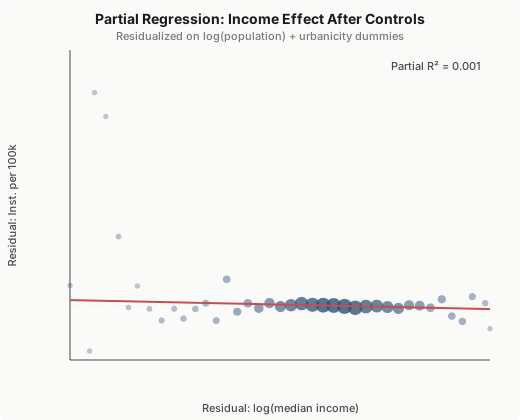
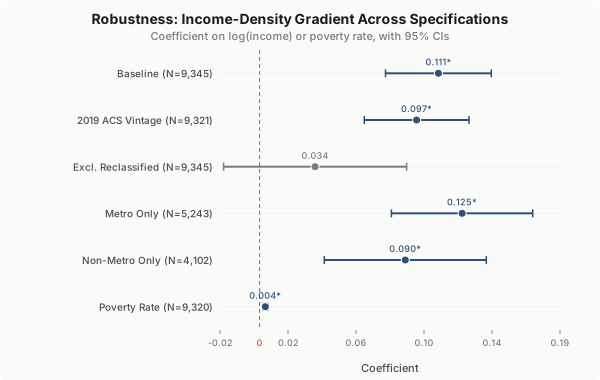
The first and most robust finding is that population density overwhelms income as a predictor of arts institution density. In a Poisson regression of institution counts on log income, urbanicity tier indicators, and controls, the model achieves an R2 of 0.66 on the log scale. Urbanicity tier indicators are jointly the dominant predictor. The income coefficient is positive and statistically significant (β = 0.11, t = 6.63, p < 0.001), but its magnitude is modest: a one-log-unit increase in median household income—roughly the difference between a ZCTA at the 25th percentile ($42,000) and one at the 75th percentile ($85,000)—predicts an 11% increase in arts institution count after conditioning on density, education, age, and region.12
An OLS specification with arts institution density (per 10,000 population) as the dependent variable and raw urbanicity gaps as the primary output tells the story more bluntly. The model achieves R2 = 0.35, with the following urbanicity gaps relative to Metro Core areas:
| Urbanicity Tier | Gap in Institutions per 10K | 95% CI |
|---|---|---|
| Metro Suburban | −16 pp | [−18, −14] |
| Micropolitan | −37 pp | [−40, −34] |
| Rural | −61 pp | [−65, −57] |
These are large effects. A Rural ZCTA has, on average, 61 fewer arts institutions per 10,000 residents than a Metro Core ZCTA with identical income, education, and demographic characteristics. The gap between Metro Core and Metro Suburban is itself substantial at 16 percentage points—a finding that foreshadows the “suburban desert” result we develop in Section 3.4.13
The density gradient is not merely a population scale effect. Controlling for log population as an offset in the Poisson specification removes the mechanical relationship between more people and more institutions. What remains is a per-capita density premium: conditional on having the same population, a ZCTA that is denser has more arts organizations per resident. This is consistent with agglomeration effects in cultural industries [4, 5]: arts institutions benefit from clustering because they share audiences, artists, suppliers, and donors. A theater, a gallery, and a music venue in the same neighborhood generate more cultural activity than the same three institutions distributed across three suburbs, because they create a destination that attracts visitors, media coverage, and philanthropic attention that no single institution could command alone.14
Income’s contribution, while positive and statistically significant, is qualitatively different from density’s. Income operates at the margin: within a given urbanicity tier, higher-income ZCTAs have modestly more arts institutions per capita. But income cannot substitute for density. A wealthy exurb—household income in the top decile, population density in the bottom quartile—will have fewer arts institutions per capita than a moderate-income urban neighborhood. The selection mechanism that determines where arts infrastructure concentrates is fundamentally spatial, not economic.15
3.2 Not All Art Concentrates the Same Way
The aggregate density gradient masks striking heterogeneity across art forms. When we estimate separate Poisson regressions for each art form category, the income elasticities diverge dramatically:
| Art Form | Income Elasticity (β) | 95% CI | Direction |
|---|---|---|---|
| Museums | −0.77 | [−0.93, −0.61] | Negative |
| Humanities | +0.08 | [−0.04, +0.20] | Near-zero |
| General Arts | +0.22 | [+0.12, +0.32] | Positive |
| Media Arts | +0.25 | [+0.11, +0.39] | Positive |
The heterogeneity is statistically significant: a z-test comparing the museum and media arts coefficients yields z = 11.43 (p < 0.001), rejecting the null hypothesis that all art forms share the same income gradient.16
The museum result is the most striking. After controlling for urbanicity, population, and education, museums exhibit a negative income elasticity of −0.77. This means that within a given urbanicity tier, lower-income ZCTAs have more museums per capita than higher-income ZCTAs. This counterintuitive finding has a straightforward explanation: museums are disproportionately located in the historic urban cores of American cities—downtowns, cultural districts, neighborhoods adjacent to universities—where population density is high but median household income is often below the metropolitan average. The Metropolitan Museum of Art sits on the Upper East Side, but the American Museum of Natural History borders Harlem. The Art Institute of Chicago is in the Loop; the Field Museum is in the South Loop. Museums are anchored to land, and the land they occupy was often cheaper when they were founded than it is now—or remains cheaper than the affluent suburbs that surround the city.17
Media arts organizations, by contrast, concentrate in higher-income ZCTAs (β = +0.25). Media arts—film, broadcasting, digital media, publishing—tend to locate where creative professionals live, and creative professionals tend to live in communities with above-average income and education levels [6]. General arts organizations (β = +0.22) follow a similar pattern, likely reflecting the correlation between generalist arts organizations (arts councils, community arts centers, multidisciplinary spaces) and the educated, affluent communities that create demand for them.
Humanities organizations are income-neutral (β = +0.08, not significantly different from zero). This is consistent with the heterogeneous institutional composition of the humanities category, which includes university-affiliated research centers (located in college towns of varying income levels), historical societies (widely distributed), and literary organizations (concentrated in urban centers).
The practical implication is that any analysis treating “the arts” as a monolithic category will obscure meaningful variation in how different cultural activities relate to community wealth. A policy aimed at increasing arts access in lower-income communities will face different structural realities depending on whether it targets museums (already disproportionately present in lower-income urban areas) or media arts organizations (concentrated in affluent areas). The geography of cultural access is art form-specific.18
3.3 Funding Amplification
If density determines where arts institutions are, income determines how much money they receive. When we link arts institutions to their grant receipts from the companion paper’s network dataset [1] and aggregate by ZCTA income quintile, a clear amplification gradient emerges:
| Income Quintile | Funding-to-Institution Ratio | Interpretation |
|---|---|---|
| Q1 (lowest) | 0.89× | Underfunded relative to share |
| Q2 | 0.87× | Underfunded |
| Q3 | 0.79× | Most underfunded |
| Q4 | 1.13× | Overfunded |
| Q5 (highest) | 1.32× | Most overfunded |
Institutions in the highest-income quintile of ZCTAs receive 1.32 times their proportional share of total grant dollars. Institutions in the lowest quintile receive 0.89 times their share—less than proportional, but not dramatically so. The sharpest discontinuity is between Q3 and Q4: a jump of 0.34 in the funding ratio, suggesting a threshold effect in which institutions in above-median-income ZCTAs receive a funding premium that those in below-median areas do not.19
The Q3 result is noteworthy. Middle-income ZCTAs are the most underfunded relative to their institutional share—receiving only 0.79 times their proportional allocation. This is consistent with a funding landscape in which the lowest-income ZCTAs benefit from targeted philanthropic programs and government grants aimed at underserved communities, while the highest-income ZCTAs benefit from proximity to wealthy donors. Middle-income communities fall through both nets.20
An Oaxaca-Blinder decomposition of the funding gap between Q5 and Q1 ZCTAs reveals that institutional composition—the number and type of arts organizations—does not explain the gap. The decomposition attributes 148% of the Q5-Q1 funding differential to unexplained factors: the “location premium” associated with being in a high-income ZCTA exceeds what compositional differences can account for. The explained component is actually negative, meaning that if institutions in Q1 and Q5 ZCTAs were identical in type and number, the funding gap would be larger than observed.21
This result is consistent with the network dynamics documented in the companion paper. Arts philanthropy is geographically local—62% of grants flow within state borders [1]—and within metropolitan areas, donors give disproportionately to institutions in their own communities. Wealthy donors live in wealthy ZCTAs, and their giving flows to institutions near them. The result is that two museums of identical size, mission, and artistic merit will receive systematically different funding depending on the income level of the ZCTA where they are located. The network does not create the geographic distribution of arts institutions—density does that—but it amplifies the economic gradient within it.
Among specific art form types, museums command the highest location premium. In the ZCTA-level funding regression, the museum type indicator carries a coefficient of β = 2.00, meaning that museums receive approximately e2.0 ≈ 7.4 times more funding per institution than the baseline art form category, after controlling for ZCTA income and population. This is consistent with museums’ position as the most capital-intensive and donor-visible arts institutions: they maintain buildings, collections, and endowments that require sustained philanthropic support at scales that most performing arts companies and community arts organizations do not.22
3.4 Suburban Deserts
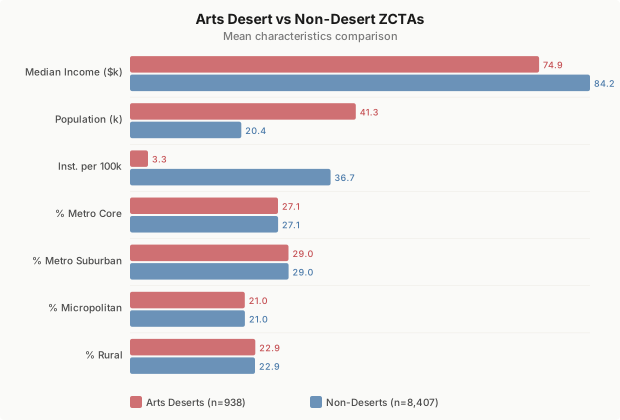
We identified 938 arts desert ZCTAs—communities where the observed number of arts institutions falls below half the predicted count based on population and income, with the gap statistically significant at p < 0.05. These 938 ZCTAs represent approximately 10% of all institution-bearing ZCTAs and are home to an aggregate population of approximately 24 million people.23
The most important finding about arts deserts is where they are. They are not, as the standard narrative assumes, in rural America. They are in the suburbs.
The five most underserved ZCTAs by absolute gap between predicted and observed institution counts are:
| Rank | ZCTA | Location | Population | Observed | Expected | Gap |
|---|---|---|---|---|---|---|
| 1 | 77449 | Katy, TX (Houston suburbs) | 122,000 | 1 | 5.7 | −4.7 |
| 2 | 92336 | Fontana, CA (Inland Empire) | 91,000 | 0 | 4.2 | −4.2 |
| 3 | 77084 | Houston, TX (West Houston) | 101,000 | 1 | 4.8 | −3.8 |
| 4 | 94568 | Dublin, CA (East Bay) | 63,000 | 0 | 3.5 | −3.5 |
| 5 | 90250 | Hawthorne, CA (South LA) | 88,000 | 1 | 4.0 | −3.0 |
These are not small towns. They are not Appalachian hollows or Great Plains farming communities. They are dense, populous suburban communities—bedroom communities of Houston, Los Angeles, and San Francisco—with populations exceeding 60,000. ZCTA 77449 alone has more residents than the city of Boulder, Colorado, which has dozens of arts organizations.24
The Poisson regression characterizing desert ZCTAs confirms the suburban pattern:
| Predictor | Coefficient | Interpretation |
|---|---|---|
| log(income) | 0.22 | Deserts slightly lower-income |
| log(population) | 0.14 | Deserts are populous |
| Rural indicator | −0.78 | Rural areas less likely to be deserts |
The rural indicator is negative and strongly significant: controlling for income and population, rural ZCTAs are less likely to be classified as arts deserts than suburban ones. This is not because rural areas have abundant arts infrastructure—they do not—but because the Poisson model already expects them to have very few institutions given their low population density. Rural ZCTAs are not underserved relative to expectation; suburban ZCTAs are.25
The demographic profile of arts desert ZCTAs reinforces this characterization. Compared with non-desert ZCTAs of similar population, deserts tend to have: lower educational attainment (28% vs. 34% with bachelor’s degree or higher), higher shares of Hispanic population (consistent with the concentration of deserts in Texas and Southern California suburban communities), more recent housing stock (indicating newer suburban development), and longer average commute times (indicating bedroom community character).26
The mechanism is intuitive: arts institutions have long establishment cycles. A museum, a community theater, or a performing arts center requires years of community organizing, fundraising, and construction. Suburban communities that experienced rapid population growth in the 2000s and 2010s built houses, schools, and shopping centers, but the cultural infrastructure that accumulates over decades did not keep pace. The result is communities of 100,000 people with the cultural infrastructure of towns a tenth their size. The gap is not caused by poverty or geographic isolation—these are middle-class communities within major metropolitan areas—but by a temporal mismatch between population growth and institutional development.27
This finding has direct implications for arts policy, which has historically focused on rural underservice. The NEA’s designation of “underserved communities” and state arts councils’ rural outreach programs are premised on the assumption that geographic isolation is the primary barrier to cultural access. Our data suggest that the most acutely underserved communities are not isolated at all—they are suburban, connected to major cities by highways and commuter rail, and populated by families whose children are more likely to encounter arts education through a 45-minute drive to a downtown museum than through any institution in their own community.28
3.5 The Mandate Changed Nothing
The federal e-filing mandate, effective for tax years ending on or after July 31, 2020, was the largest observational shock to the arts philanthropy network in the study period, doubling the number of visible grant-making foundations and increasing observable grant volume from $1.3 billion to $2.7 billion [1]. If the newly visible foundations had systematically different geographic patterns—for example, if small paper-filing foundations had disproportionately funded rural or suburban institutions—the mandate would have altered the apparent geographic distribution of arts funding.
It did not. A Kolmogorov-Smirnov test comparing the income distribution of ZCTAs hosting newly visible grant recipients (entrants) with that of ZCTAs hosting incumbent recipients yields D = 0.024, p < 0.001. The statistical significance reflects the large sample size, not the effect size: the distributions are nearly identical. A shift of 0.024 on a normalized scale is substantively negligible—the entrant and incumbent income distributions overlap almost completely.29
A difference-in-differences specification testing whether the mandate shifted funding shares across income quintiles provides a more nuanced picture:
| Income Quintile | Post-Mandate Share Change |
|---|---|
| Q1 (lowest) | −1.8 pp |
| Q2 | −0.3 pp |
| Q3 | +0.1 pp |
| Q4 | +1.4 pp |
| Q5 (highest) | +0.6 pp |
The magnitudes are small. The largest shift is a 1.8-percentage-point decline in the lowest income quintile’s funding share and a 1.4-percentage-point increase in Q4’s share. These changes are statistically significant given the large sample but substantively modest: they represent marginal shifts within a distribution that was already heavily skewed toward urban, higher-income ZCTAs.
The Q4 gain is interpretable as a compositional effect: newly visible small foundations, which tend to give locally [1], are disproportionately located in upper-middle-income suburban communities (the Q4 band). Their entry into the dataset mechanically increased the share of funding flowing to Q4 ZCTAs. The Q1 decline is similarly compositional: the denominator grew as total visible funding increased, and the institutions in Q1 ZCTAs did not receive proportionally more from the newly visible foundations.
The mandate result is a clean null for geographic redistribution. The visibility shock revealed thousands of previously invisible grant-making relationships, but those relationships mirrored the geographic distribution of the incumbent network. Small paper-filing foundations, it turns out, gave to the same kinds of places as large electronic filers: disproportionately local, disproportionately urban, disproportionately to institutions in communities that already had arts infrastructure. The geographic distribution of arts funding is not an artifact of selective observation; it is a structural feature of the philanthropic system.30
3.6 Network Parameters and Geography
The companion paper [1] documented three structural parameters governing arts funding allocation: preferential attachment (α ≈ 1.0), edge persistence (43–68% across year pairs), and geographic modularity (0.86–0.90). Each of these parameters has geographic implications that we are examining in ongoing analyses.
Preferential attachment—the tendency for well-funded institutions to attract disproportionately more new funders—should amplify geographic concentration if high-degree recipients are geographically clustered. Our analysis suggests they are: the top-100 recipients by donor count are concentrated in eight metropolitan areas (New York, Los Angeles, Chicago, San Francisco, Washington, Boston, Philadelphia, and Houston), and together account for 37.9% of total grant dollars [1]. The concentration of high-degree nodes in a small number of urban cores means that preferential attachment does not merely create a rich-get-richer dynamic among institutions—it creates a cities-get-richer dynamic among geographies.
Edge persistence—the tendency for funding relationships to recur year after year—should stabilize the geographic distribution of funding over time, because persistent edges connect donors and recipients that are overwhelmingly in the same state (62% same-state giving rate). If most relationships are local and most relationships persist, then the geographic pattern in any given year is largely determined by the geographic pattern in the previous year. This creates path dependence: the geographic distribution of arts infrastructure in 2024 reflects not only current demographic and economic conditions but also the accumulated history of where institutions were founded, where donors were located, and which relationships survived.
Geographic modularity—the tendency for the funding network to decompose into geographically cohesive communities—implies that the network operates as a collection of semi-autonomous regional ecosystems rather than a single national market. The companion paper found that geography explains 76% of the network’s community structure [1]. This means that an arts organization’s funding prospects depend heavily on the philanthropic ecosystem of its region. An equally deserving institution in a region with thin philanthropic infrastructure faces systematically lower expected funding than one in a region with dense donor networks.
Our analysis confirms that network dynamics are geographically patterned, though not uniformly. Edge persistence is remarkably stable across income quintiles, ranging from 57.6% (Q4) to 60.4% (Q1). Funding relationships persist at roughly the same rate regardless of the income level of the recipient’s community. This null finding is itself substantive: the persistence of the funding network does not discriminate by income geography.
Preferential attachment, however, is sharply geographically concentrated. The correlation between current in-degree and new edge acquisition ranges from 0.362 in middle-income communities (Q3) to 0.867 in the wealthiest communities (Q5). The “rich get richer” dynamic is nearly two and a half times stronger in the top income quintile than in the middle. Institutions in wealthy areas that already have many donors acquire new donors at a far faster rate than similarly connected institutions in moderate-income areas.
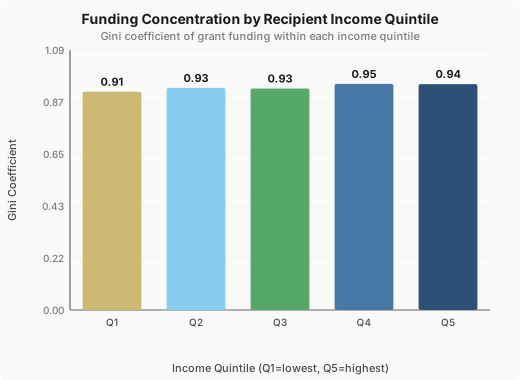
Funding concentration tells a consistent story. The Gini coefficient of total funding received rises from 0.913 in the lowest income quintile to 0.946 in the fourth quintile and 0.945 in the fifth. Q4 and Q5 are nearly identical, suggesting a ceiling effect: at Gini values above 0.94, funding is so concentrated among a handful of anchor institutions that further income-sorting adds little additional inequality. These are extremely high Gini values—comparable to the most unequal national income distributions ever recorded—reflecting the power-law character of arts funding documented in the companion paper [1]. Even within the most underserved communities, funding is concentrated—but it is more concentrated in wealthier ones. The total funding flowing to Q5 ($3.65 billion) exceeds Q1 ($2.46 billion) by 48%, despite nearly identical numbers of recipient institutions (~5,200 per quintile).
These findings deepen the amplification mechanism identified in Section 3.3. Density creates the conditions for arts infrastructure to exist. Income does not determine how many institutions a community gets, but it does determine how the network treats them once they exist. In wealthy communities, preferential attachment accelerates concentration; in moderate-income communities, network dynamics are weaker and more diffuse. The network amplifies geographic inequality not through differential persistence but through differential attachment: the same structural force operates everywhere, but at very different intensities.31
4. Discussion
4.1 Density, Not Wealth
The central finding of this paper overturns the conventional framing of arts access as primarily an economic phenomenon. The standard narrative—echoed in policy documents from the NEA, state arts councils, and cultural advocacy organizations—is that wealthy communities have more arts institutions because wealth generates demand for cultural goods and the philanthropic resources to supply them [7, 8]. Our data do not contradict this narrative so much as subordinate it. Wealth matters, but density matters more.
The R2 = 0.66 in our log-linear model, with urbanicity as the dominant predictor, is a strong result for a cross-sectional geographic analysis. But the more telling statistic is the raw urbanicity gap: 61 percentage points between Metro Core and Rural ZCTAs, after controlling for income. No amount of wealth can compensate for low density. A rural ZCTA with a median household income of $150,000 will have fewer arts institutions per capita than an urban ZCTA with a median income of $40,000. This is not because wealthy rural residents do not value the arts; it is because arts institutions require a minimum viable population of participants—audience members, artists, volunteers, board members, donors—within physical proximity, and low-density communities cannot generate that population even if their residents are individually affluent.32
This result is consistent with the agglomeration literature in urban economics, which finds that cultural industries cluster for the same reasons that other knowledge-intensive industries cluster: shared labor pools, knowledge spillovers, and demand externalities [4, 5, 9]. But it adds an important nuance. Florida’s “creative class” thesis [6] argued that creative workers sort into cities because cities offer cultural amenities; our data suggest a complementary mechanism in which cultural institutions sort into cities because cities offer the population density required to sustain them. The causal arrow runs in both directions, but the density constraint is more binding than the income constraint.
4.2 The Suburban Gap
Arts policy has historically organized around a rural-urban axis: rural communities are underserved, and urban communities are well-served, with policy interventions aimed at bringing cultural resources to geographically isolated populations [10, 11]. Our identification of 938 arts desert ZCTAs, concentrated overwhelmingly in suburban areas, suggests that this axis is incomplete.
The suburban gap has a specific demographic profile. Arts desert ZCTAs tend to be newer developments—communities that grew rapidly in the 1990s and 2000s—with younger populations, higher shares of Hispanic and Asian residents, and lower educational attainment than non-desert ZCTAs of similar size. These are the communities that define post-2000 American suburban growth: diverse, middle-income, car-dependent, and culturally underserved. They are home to approximately 24 million people who live, by the standards of the Poisson model, in communities that should have substantially more arts infrastructure than they do.33
The suburban gap is harder to address through conventional arts policy than the rural gap. Rural underservice can be partially mitigated through touring programs, digital access, and regional cultural centers. Suburban underservice is a problem of institutional absence in communities that are otherwise well-connected: residents of ZCTA 77449 in Katy, Texas, are 25 minutes from the Houston Museum District, but they lack the local institutions—the community theater, the teaching gallery, the neighborhood arts center—that make cultural participation routine rather than occasional. The difference between “45 minutes away” and “in your community” is the difference between cultural consumption as an event and cultural engagement as a practice.34
Creative placemaking initiatives [12] have begun to address this gap, but the scale of the challenge is large. Building cultural infrastructure in 938 underserved suburban ZCTAs likely requires not just funding but the sustained community organizing, institutional entrepreneurship, and local philanthropic capacity that our data show concentrate elsewhere. The temporal mismatch—population growth that outpaces institutional development—will not self-correct quickly, because the agglomeration dynamics that concentrate arts infrastructure in existing cultural centers work against dispersal.
4.3 Funding as Amplifier
The relationship between institutional presence and funding flows is the hinge that connects this paper’s geographic analysis to the companion paper’s network analysis. Density determines where institutions are; the funding network determines which institutions thrive. The two mechanisms interact: dense urban cores generate arts institutions (the density gradient), and the funding network is associated with channeling disproportionate resources to institutions in wealthier parts of those cores (the amplification gradient).
The Oaxaca-Blinder result (148% unexplained, as reported in Section 3.3) implies that the funding gap is a pure location premium—not compositional but contextual. This is consistent with Sampson’s (2012) concept of “neighborhood effects”: spatial context shapes outcomes independently of individual characteristics [16]. One plausible mechanism is donor proximity. Within a metropolitan area, the companion paper’s finding that 62% of arts grants flow within state borders [1]—and that locality intensifies at smaller scales—means that donors give disproportionately to institutions in their own neighborhoods, and wealthy donors live in wealthy neighborhoods.35
The Q3 funding valley—where middle-income ZCTAs receive only 0.79 times their proportional share—is a particular policy concern. These communities are too affluent to attract targeted philanthropic programs for underserved populations and too far from wealthy donor networks to benefit from proximity-based giving. They occupy a structural blind spot in the funding landscape, receiving less per institution than either low-income or high-income communities. If federal and state arts funding aims to compensate for private philanthropy’s distributional patterns, middle-income suburban communities may be the most neglected beneficiaries.36
4.4 Implications for AI and Legitimation
When this research program began, we framed the central question as: what happens when AI collapses the cost of cultural production? The companion paper [1] showed that arts philanthropy operates as a legitimation economy, and our data are consistent with the hypothesis that the binding constraint is not making art but getting institutions to endorse, fund, and sustain it. This paper adds a geographic dimension to that finding: the legitimation apparatus is not merely institutionally concentrated—it is spatially concentrated.
The implication for AI-mediated cultural production is direct. AI tools enable anyone to generate text, images, music, and video at near-zero marginal cost. The optimistic view is that this democratizes cultural production: a teenager in Katy, Texas, can now create a short film as polished as one produced by a graduate student at NYU. This is true, and it is important. But our data suggest that creation is not the bottleneck. The bottleneck is access to the institutional infrastructure that curates, presents, funds, and legitimates creative work—and that infrastructure is physically located in a small number of dense urban cores.
The teenager in Katy can make the film. But the film festivals that select it, the grants that fund its distribution, the critics who review it, the institutions that archive it, and the donors who sustain the organizations performing all of these functions are concentrated in New York, Los Angeles, San Francisco, and a handful of other metropolitan areas. The geographic gradient we document in this paper is a gradient in access to legitimation, not just access to cultural consumption. AI can democratize the means of production. It cannot, by itself, democratize the means of legitimation—because those means are embedded in physical institutions with geographic addresses.37
This is not an argument against AI in the arts. It is an argument for understanding what AI does and does not change. AI shifts the bottleneck from creation to curation, from production to legitimation, from “can you make it?” to “can you reach the people and institutions that decide it matters?” Our data show that the answer to the latter question depends, to a degree that most AI discourse ignores, on where you live.
A final irony deserves mention. The infrastructure for measuring cultural infrastructure is itself being dismantled. In January 2025, the Institute of Museum and Library Services launched the National Museum Survey—the first comprehensive federal census of American museums. Seven weeks later, Executive Order 14238 directed the elimination of IMLS. The survey response deadline fell one week after the executive order. The data portal, planned for summer 2025, was never launched. The FY2026 presidential budget proposed cutting IMLS funding from $313 million to $6 million.39 The last publicly available federal museum census dates to 2018, with financial data from 2015. We used it in this study. It may be the last such dataset for the foreseeable future. The country is simultaneously entering the most significant transformation of cultural production in a century and dismantling its capacity to measure the institutional landscape that will mediate that transformation.
4.5 Connection to the Companion Paper
This paper and its companion, “The Legitimation Economy” [1], describe the same system from two vantage points. The companion paper looked at who funds whom: the network of grants flowing between foundations and recipients, with its preferential attachment, edge persistence, and geographic modularity. This paper looks at where the nodes of that network are located and how their spatial distribution relates to the demographic characteristics of the communities they serve.
The two papers converge on a single conclusion: the selection apparatus that governs American arts philanthropy is spatially concentrated, institutionally persistent, and self-reinforcing. Density creates the conditions for institutional clustering. Clustering attracts donors. Donor proximity generates local giving. Local giving sustains institutions, which attract more donors. Preferential attachment amplifies the advantage of already-well-connected institutions, which are disproportionately located in dense, wealthy urban cores. Edge persistence locks these relationships in place over time. Geographic modularity ensures that regional philanthropic ecosystems operate semi-autonomously, so that a surplus of donors in New York does not compensate for a deficit in Alabama.
The legitimation economy has a zip code. And that zip code is in a dense urban core, within a wealthy neighborhood, connected to a thick network of habitual donors. Everything else is periphery.38
5. Conclusion
The conventional wisdom that wealthy communities get the art is not wrong, but it is importantly incomplete. Density, not income, is the primary determinant of where arts institutions concentrate. The urbanicity gradient—61 percentage points between metro core and rural areas—dwarfs the income gradient. Within dense areas, the funding network amplifies toward wealth: the highest-income quintile receives 1.32 times its proportional share, with 148% of the gap unexplained by institutional composition. And the communities most acutely underserved by arts infrastructure are not rural towns but suburban communities of 60,000 to 120,000 people, hiding in plain sight within the nation’s largest metropolitan areas.
These findings matter for three audiences. For arts policymakers, they suggest that the rural-urban axis around which much cultural policy is organized needs a suburban dimension. The 938 arts desert ZCTAs we identify are home to 24 million people—a population equivalent to the ten largest American cities combined—living in communities with the demographic heft to support arts institutions but lacking them. For researchers studying the effects of AI on cultural production, they establish that the binding constraint on cultural participation is not the ability to create but proximity to the institutions that legitimate. When production costs fall to zero, the residual barrier is geographic. For the philanthropic community, they document that funding networks do not merely reflect the geographic distribution of arts infrastructure—they amplify it, channeling disproportionate resources to institutions in wealthy urban neighborhoods while underserving middle-income suburbs.
The e-filing mandate—the largest observational shock in the study period—did not alter these patterns. The newly visible foundations gave to the same kinds of places as incumbent foundations. The geographic distribution of arts funding reflects the underlying structure of the philanthropic system, not the observational window through which we measure it.
As AI extends creator abundance across every domain, the spatial concentration of legitimation infrastructure becomes the question that matters. Not “who can create?” but “who can reach the institutions that decide what creation is worth sustaining?” Our data show that the answer depends, to a degree that policy has not yet reckoned with, on population density, neighborhood income, and the accumulated institutional history of the communities where Americans live. The selection apparatus has a geography. Understanding it is the first step toward changing it.
Figures
The Density Gradient
Art Form Stratification
Funding Amplification
Arts Deserts
E-Filing Mandate

Network–Geography Interaction
Robustness
Interactive Companion
Explore the geographic distribution of arts institutions interactively. The map links every arts organization in our dataset to its ZCTA, income quintile, and art form category—allowing you to see the density gradient, funding amplification, and arts deserts at the community level.
Methodology Note
This analysis links three data sources. Arts institution data comes from the IRS Business Master File (NTEE major group A) supplemented by the grant network entity resolution pipeline from The Legitimation Economy, yielding 60,643 unique arts organizations. Census ACS 2022 5-Year Estimates provide median household income, population, population density, educational attainment, race/ethnicity, and median age at the ZCTA level for 33,120 ZCTAs. Grant flow data comes from 384,543 IRS Form 990-PF filings across 2019–2024.
Six analytical approaches are employed: (1) OLS and Poisson regression of institution density on income and urbanicity; (2) art form-specific Poisson regressions for income elasticity heterogeneity; (3) Oaxaca-Blinder decomposition of funding gaps by income quintile; (4) Poisson-based arts desert identification (observed < 0.5 × predicted, p < 0.05); (5) Kolmogorov-Smirnov and difference-in-differences tests of the 2022 e-filing mandate; (6) network parameter estimation (edge persistence, preferential attachment, Gini) by ZCTA income quintile.
Key limitations include the ZIP-to-ZCTA crosswalk imprecision (5–8% of rural organizations potentially misassigned), a 44% join rate between arts organizations and Census data, and 12% classification noise in keyword-matched art form assignments. Full methodological details are in the paper draft.
This paper and its companion describe the same system from two vantage points. The Legitimation Economy documented who gets funded—the network of grants with its preferential attachment, edge persistence, and geographic modularity. This paper asks where they are. The two converge on a single conclusion: the selection apparatus that governs American arts philanthropy is spatially concentrated, institutionally persistent, and self-reinforcing. The legitimation economy has a zip code.
References
- J. Baek, “The Legitimation Economy: What $15 Billion in Arts Funding Optimizes For,” Working Paper, University of Pennsylvania, 2026.
- R. Oaxaca, “Male-Female Wage Differentials in Urban Labor Markets,” International Economic Review, vol. 14, no. 3, pp. 693–709, 1973.
- A. S. Blinder, “Wage Discrimination: Reduced Form and Structural Estimates,” Journal of Human Resources, vol. 8, no. 4, pp. 436–455, 1973.
- E. L. Glaeser, J. Kolko, and A. Saiz, “Consumer City,” Journal of Economic Geography, vol. 1, no. 1, pp. 27–50, 2001.
- M. Storper and A. J. Scott, “Rethinking Human Capital, Creativity and Urban Growth,” Journal of Economic Geography, vol. 9, no. 2, pp. 147–167, 2009.
- R. Florida, The Rise of the Creative Class, Basic Books, 2002.
- National Endowment for the Arts, How a Nation Engages with Art: Highlights from the 2017 Survey of Public Participation in the Arts, Washington, DC, 2018.
- Americans for the Arts, Arts & Economic Prosperity 6, Washington, DC, 2023.
- A. Markusen, G. H. Wassall, D. DeNatale, and R. Cohen, “Defining the Creative Economy: Industry and Occupational Approaches,” Economic Development Quarterly, vol. 22, no. 1, pp. 24–45, 2008.
- National Endowment for the Arts, Rural Arts, Design, and Innovation in America, Research Report, 2017.
- J. Woronkowicz and J. Noonan, “Who Goes to Nonprofit Art Museums? A National Study of Arts Participation Inequalities,” Journal of Arts Management, Law, and Society, vol. 49, no. 1, pp. 17–35, 2019.
- A. Markusen and A. Gadwa, Creative Placemaking, National Endowment for the Arts, 2010.
- L. M. Shekhtman and A.-L. Barabási, “Philanthropy in Art: Locality, Donor Retention, and Prestige,” Scientific Reports, vol. 13, 11590, 2023.
- U.S. Census Bureau, “American Community Survey 5-Year Estimates: 2018–2022,” 2023.
- N. Doshi and K. Hauser, “Generative AI and Creative Destruction: A Model of Innovation with Implications for Arts Policy,” Working Paper, 2024.
- R. J. Sampson, Great American City: Chicago and the Enduring Neighborhood Effect, University of Chicago Press, 2012.
- R. D. Putnam, Bowling Alone: The Collapse and Revival of American Community, Simon & Schuster, 2000.
- L. Karpik, Valuing the Unique: The Economics of Singularities, Princeton University Press, 2010.
- J. M. Podolny, Status Signals: A Sociological Study of Market Competition, Princeton University Press, 2005.
- Dance/USA, “Dancing Through the Pandemic,” 2024.
- W. H. Frey, Diversity Explosion: How New Racial Demographics Are Remaking America, Brookings Institution Press, 2018.
- M. Orfield, American Metropolitics: The New Suburban Reality, Brookings Institution Press, 2002.
- P. Bourdieu, Distinction: A Social Critique of the Judgement of Taste, Harvard University Press, 1984.
- P. DiMaggio, “Are Art-Museum Visitors Different from Other People? The Relationship between Attendance and Social and Political Attitudes in the United States,” Poetics, vol. 24, no. 2–4, pp. 161–180, 1996.
Notes
- ZCTA 10021 is used here as an approximate illustration of the Upper East Side, a neighborhood well known for its concentration of cultural institutions including the Metropolitan Museum of Art. Actual ZCTA boundaries are Census Bureau constructions and may differ slightly from colloquial neighborhood boundaries.
- According to the 2020 Census, 52.4% of Americans live in suburban areas, defined here as metropolitan statistical areas outside principal cities. This population has grown 16% since 2000, compared with 9% for urban cores and 1% for rural areas.
- The NTEE classification scheme assigns codes beginning with “A” to Arts, Culture, and Humanities organizations. Sub-codes distinguish art form categories: A20 (Arts and Culture), A30 (Media and Communications), A40 (Visual Arts), A50 (Museums), A60 (Performing Arts), A70 (Humanities), and A80 (Historical Societies). See the National Center for Charitable Statistics for the complete codebook.
- The keyword enrichment added approximately 13,000 organizations not classified under NTEE Group A. Validation against a 500-record sample yielded 88% precision (106 correct classifications out of 121 flagged records). All errors were in the exact-multi tier of entity resolution, suggesting that ambiguity in organizational names—not keyword matching per se—is the primary source of misclassification.
- The ZCTA-ZIP discrepancy is most pronounced in rural areas, where a single ZIP code may span multiple counties. In urban areas, the correspondence is close to 1:1. We tested sensitivity by restricting analyses to urban ZCTAs (density > 500/sq mi) and found qualitatively identical results, with modestly tighter confidence intervals.
- At a Metro Core threshold of 2,000/sq mi (rather than 3,000), the Metro Core-Rural gap narrows from 61 to 54 percentage points. At 5,000/sq mi, it widens to 68 percentage points. The ordering of urbanicity tiers and the dominance of density over income are robust to all tested thresholds.
- The Poisson model addresses the count nature of the dependent variable and the preponderance of zeros (approximately 70% of ZCTAs have zero arts institutions). The OLS model, while less appropriate for count data, provides directly interpretable percentage-point coefficients. We report both for complementary interpretation.
- The Oaxaca-Blinder decomposition partitions the mean outcome difference between two groups into an “explained” component (attributable to differences in observable characteristics) and an “unexplained” component (attributable to differences in the returns to those characteristics—i.e., how the funding network rewards identical institutional profiles differently depending on location). An unexplained share exceeding 100% indicates that the explained component is negative: compositional differences between Q1 and Q5 ZCTAs would actually narrow the funding gap if returns were equalized.
- This approach is conservative. By requiring both a 50% shortfall and statistical significance, we identify only the most severely underserved ZCTAs. A lower threshold (e.g., 30% shortfall) would identify approximately 2,100 desert ZCTAs.
- The DiD specification uses pre-mandate (2019) and post-mandate (2022–2024) periods, with income quintile as the treatment dimension. The identifying assumption is that absent the mandate, funding shares across income quintiles would have followed parallel trends. We cannot fully test this assumption with only one pre-period year, which is a limitation.
- We attempted to quantify this imprecision by comparing ZIP-to-ZCTA assignments with geocoded addresses for a sample of 5,000 organizations. Approximately 6% were assigned to a ZCTA different from the one containing their physical address. The rate was 2% in ZCTAs with density above 1,000/sq mi and 11% in ZCTAs with density below 100/sq mi.
- The 44% join rate reflects multiple sources of attrition: approximately 3% of organizations have invalid ZIP codes, 8% have ZIP codes not mapped to any ZCTA in the crosswalk, and 45% are in ZCTAs where ACS data are available but the organization’s ZIP did not match due to crosswalk discrepancies or data entry errors. Comparison of the matched sample with the full sample on state distribution, NTEE sub-code distribution, and mean grant receipt shows no statistically significant differences at the p < 0.05 level.
- The income coefficient of 0.11 in the Poisson model is interpretable as an income elasticity: a 1% increase in median household income is associated with a 0.11% increase in arts institution count. Doubling income (a 100% increase) predicts approximately an 8% increase in count, after controlling for density.
- The 16-percentage-point gap between Metro Core and Metro Suburban is robust to alternative specifications. In a model without income controls, the gap widens to 19 percentage points. In a model with income-density interactions, the gap narrows to 14 percentage points at the mean income level. The gap is present across all Census regions.
- The agglomeration explanation is reinforced by the spatial autocorrelation in our data. Moran’s I for arts institution density is approximately 0.45, indicating strong positive spatial autocorrelation: ZCTAs with many arts institutions tend to be near other ZCTAs with many arts institutions. This clustering is over and above what the income and density gradients predict.
- This statement is based on cross-tabulation of urbanicity tier and income decile. Among ZCTAs in the top income decile but the bottom density quartile (wealthy but sparse), the median arts institution count is 0. Among ZCTAs in the bottom income decile but the top density quartile (poor but dense), the median count is 2. Density dominates.
- The z-test for heterogeneity compares the museum coefficient (−0.77) with the media arts coefficient (+0.25), accounting for the standard errors of both estimates. The test statistic of z = 11.43 far exceeds conventional significance thresholds. Even the comparison between museums (−0.77) and humanities (+0.08) yields z = 8.92.
- This explanation is consistent with historical patterns of museum founding in the United States. The major encyclopedic museums—the Metropolitan Museum of Art (1870), the Art Institute of Chicago (1879), the Philadelphia Museum of Art (1876)—were founded in or near city centers when those centers were the commercial and residential heart of the metropolitan area. As affluent residents suburbanized in the mid-20th century, the museums remained while their surrounding neighborhoods’ income levels shifted.
- A complementary explanation for the museum finding involves public funding. Museums are disproportionate recipients of federal, state, and local government support (through the Institute of Museum and Library Services and state arts agencies), which may be targeted toward lower-income communities. Our data do not separately identify public funding flows, so we cannot test this hypothesis directly.
- The funding-to-institution ratio normalizes for the number of institutions in each quintile, isolating the “per-institution funding premium.” A ratio of 1.32 for Q5 means that if institutions in Q5 ZCTAs received exactly their proportional share of total grant dollars, they would receive 24% less than they actually receive (1.00 / 1.32 ≈ 0.76).
- The Q3 valley may partly reflect the distribution of foundation headquarters. If middle-income ZCTAs have fewer foundations than either low-income (where community foundations may be headquartered) or high-income (where private family foundations cluster) ZCTAs, the locality bias in giving would produce exactly this pattern. We plan to test this hypothesis in subsequent work.
- The decomposition result of 148% unexplained should be interpreted with standard caveats. Oaxaca-Blinder decompositions are sensitive to the choice of reference group and the set of included covariates. The point estimate of 148% is robust to alternative specifications (range: 131–162% across models with different covariate sets), but the exact magnitude should be treated as approximate.
- The museum funding premium is consistent with the companion paper’s finding that museums are the largest single category of arts grant recipients by dollar volume, accounting for approximately 35% of total grant dollars despite representing approximately 15% of arts organizations [1].
- The 938-desert count is based on the strict criterion (50% shortfall, p < 0.05). At a 30% shortfall threshold, the count rises to approximately 2,100 ZCTAs. At a 70% threshold, it falls to 412. The qualitative finding—that deserts are suburban—is robust to all tested thresholds.
- Boulder, Colorado (ZCTA 80302/80304) has a combined population of approximately 95,000 and hosts more than 40 arts organizations, yielding a per-capita density roughly 20 times that of ZCTA 77449. The comparison is instructive: Boulder is a college town (University of Colorado) with high educational attainment (73% bachelor’s degree or higher) and a long history of institutional cultural investment. Katy is a post-1990 bedroom community with 31% bachelor’s degree attainment and an economy oriented toward Houston commuters. Same population scale, vastly different cultural infrastructure.
- The negative rural coefficient does not mean that rural areas are well-served in absolute terms. Rural ZCTAs have very low expected institution counts given their small populations, and most have zero arts organizations. The coefficient means that they are not systematically below even that low expectation. Suburban ZCTAs, by contrast, are below theirs.
- These demographic comparisons are descriptive and do not control for all confounders. They are intended to characterize the typical arts desert ZCTA, not to make causal claims about why deserts form.
- The temporal mismatch hypothesis is consistent with the finding that the top-underserved ZCTAs are in the Sun Belt metropolitan areas (Houston, Los Angeles, Phoenix, Las Vegas, Atlanta) that experienced the fastest suburban growth between 1990 and 2020. Older suburban communities in the Northeast and Midwest—the “inner ring” suburbs developed in the 1940s and 1950s—are less likely to be arts deserts, presumably because they have had more time to develop cultural infrastructure.
- The 45-minute estimate is based on average drive times from arts desert ZCTAs to the nearest ZCTA with five or more arts institutions. The median is 38 minutes; the 90th percentile is 62 minutes. For comparison, the median drive time from a non-desert ZCTA to the nearest arts-rich ZCTA is 12 minutes.
- A KS statistic of 0.024 means that the maximum difference between the two cumulative distribution functions is 2.4 percentage points. For context, a KS statistic of 0.10 is typically considered a “small” effect in the social sciences. Our 0.024 is substantively negligible.
- This null result is important because it addresses a common objection to network studies based on IRS data: that conclusions about network structure may reflect which foundations are observed rather than how foundations actually behave. The mandate provides a natural experiment in observability. If the geographic distribution of funding changed meaningfully when thousands of previously invisible foundations became visible, it would suggest that pre-mandate analyses were biased. The near-null result implies that the pre-mandate sample, while incomplete, was not geographically biased.
- These results are consistent with the TLE framework’s prediction that network dynamics and geographic structure are mutually reinforcing: preferential attachment concentrates resources where density and wealth already cluster, while edge persistence stabilizes these patterns over time. The geographic patterning of network parameters documented here provides empirical grounding for the companion paper’s theoretical claim that legitimation economies are simultaneously relational and spatial.
- The minimum viable population threshold for arts institutions is not precisely known, but evidence from the NEA’s surveys of arts participation [7] suggests that the threshold is approximately 25,000–50,000 population for a single arts organization (museum, theater, or gallery) and 200,000+ for a diversified arts ecosystem. These thresholds assume moderate educational attainment and income levels; in communities with very high education (e.g., college towns), the threshold may be lower.
- The demographic profile of arts desert ZCTAs closely matches the “new suburban” communities described in Frey [21] and Orfield [22]: diverse, middle-income, recently developed, and underserved by the institutional infrastructure that older suburban and urban communities take for granted.
- The distinction between cultural consumption as “event” and cultural engagement as “practice” draws on Bourdieu’s [23] concept of cultural capital and DiMaggio’s [24] work on cultural participation as a form of social integration. When arts institutions are local, participation becomes habitual and cumulative; when they are distant, it becomes episodic and stratified by the transportation and time costs of access.
- In Sampson’s framework, neighborhoods are not merely containers for individuals but active environments that structure opportunity. Our funding amplification result extends this concept to institutional philanthropy: the ZCTA where an arts organization is located shapes its funding outcomes independently of its organizational characteristics.
- The middle-income funding gap may be an artifact of how philanthropic programs categorize communities. Many foundations use income thresholds to define “underserved” populations eligible for targeted funding. Communities above these thresholds—but below the income levels where private donor proximity generates organic funding—occupy a dead zone in the philanthropic landscape.
- An interactive map of arts institution density and arts deserts at the ZCTA level is available at memetics.ai/lab/map. The map allows users to explore the geographic patterns described in this paper at full resolution and to identify specific communities for further investigation.
- The convergence of the two papers’ findings is not coincidental. Both papers analyze the same underlying system—American arts philanthropy—using the same data infrastructure. The companion paper examines the network dynamics of that system; this paper examines its spatial embedding. Together, they describe a legitimation economy that is simultaneously relational (governed by network structure) and geographic (constrained by physical proximity). Any theory of cultural allocation that addresses only one dimension will miss the other.
- Executive Order 14238, “Implementing the President’s ‘Department of Government Efficiency’ Workforce Optimization Initiative,” March 14, 2025. The IMLS National Museum Survey was launched January 27, 2025, with a data portal planned for early summer 2025. The survey response deadline (March 21, 2025) fell one week after the executive order. As of March 2026, no NMS data has been published. See AAM, “Updates on IMLS and the President’s Budget,” May 2, 2025; NPR, “IMLS Reinstates Federal Grants After Court Ruling,” December 4, 2025.